

- Telescopes
- Overview:
Telescopes - Achromatic Refractor
- Apochromatic Refractor
- Overview:
Apochromatic Refractor - ED Refractor - less color aberration than an achromatic
- SD APO - color free 2-element APO objective
- EDT APO - 3 element ED objective
- High End APO with 3-element APO objective - no color aberation
- Flatfield APO with flat field for Astrophotography
- All Apos and EDs from all manufacturers - large overview
- TS APO and ED from Japan with high quality optics
- Overview:
- Newtonian Telescopes
- Dobsonian Telescopes
- RC Ritchey Chretien Telescopes
- Casssegrain Telescopes
- Reflektor Telescopce with Lens Correcture
- Maksutov Cassegrain Telescopes
- GoTo Telescopes
- Smart Telescopes
- Solar Telescopes H-Alpha
- Overview:
- Mounts Tripods Rings Rails Power Supply ...
- Overview:
Mounts Tripods Rings Rails Power Supply ... - Mounts Equatorial with GoTo
- Mounts Equatorial without GoTo
- Mounts Azimutal with GoTo
- Mounts Azimutal without GoTo
- Mounts GoTo - Harmonic Drive
- Travel mounts for astro imaging
- Tripods Piers Polar Wedges
- Mount Control & Electronics
- Dovetail Clamps, Plates and Mount Adapters
- Tube Rings
- Power Supply
- Counterweights Balance Weights
- Mount Accessories - Other
- Overview:
- Telescope Accessories
- Overview:
Telescope Accessories - Eyepieces
- Barlows & Reducer Lenses
- Diagonal Mirrors and Prisms
- Binocular Viewers
- Finder Scopes
- Telescope Collimation and Test
- Cleaning Tools
- Transport and Storage
- Dust protection for Telescopes & Accessories
- Stray Light Protection
- Dewcaps and Heater
- Focusers, Adapters, Motorfocus
- Telescope DIY & Improvement
- Other telescope accessories
- Replacement Parts
- Overview:
- Filters
- Overview:
Filters - Color Filters and Color Filtersets
- Nebular Filters for Visual Observing
- Neutral-Density and Polfilter
- Photo Narrowband Nebular Filters
- Photo Broadband Filters
- Photo Planetary Filters
- Photo R-G-B and IR Cut Filters
- Photo - Filtersets
- Photometric Filters
- Clip Filter for DSLR Cameras
- Filter Wheels and Filterslider
- Solar Filters for white light
- Solarfilter for H-Alpha and Calcium
- Overview:
- Adaptors
- Overview:
Adaptors - Adapter 1,25" and 24,5mm
- Adapter 2"
- Adapter T2 - M42x0.75
- Adapter M48x0,75
- Adapter M54
- Adapter SC
- Adapter M63
- Adapter M68
- Adapter to other Threads
- Adapter Extensions
- Adapter camera bayonet
- Adapter Objective Filterthread
- Adapter Quick Changing , Rotation
- Adapter Eyepiece Projection
- Adapters Tilting
- Overview:
- Astrophotography and Photography
- Overview:
Astrophotography and Photography - Cooled Cameras
- Cameras without Cooling
- Deep-Sky Cameras uncooled
- Set-Offers Camera, Filter, Wheels
- Acessories for Cameras
- Travel mounts for astro imaging
- Imaging Correctors for Telescopes
- Autoguiding Cameras & Sets
- Everything for Guiding
- Focusing aids - Bahtinov mascs
- Flat Field foils and boxes
- Lenses for Cameras
- Piggyback Camera Holder
- Camera Bags, Photocases & more
- Digital Camera and Smartphone Adapter
- Other photo accessories
- Overview:
- Binoculars, Spotting Scopes, Microscopes, Range Finders
- Overview:
Binoculars, Spotting Scopes, Microscopes, Range Finders - Spotting Scopes and Acessories
- Roof Prism Binoculars
- Binoculars with Porro prisms
- Binoculars from 100mm Aperture
- Binoculars with 1,25 inch eyepieces
- TSMX APO Binoculars
- Binoculars for Astronomy
- Binoculars Hiking Bird watching
- Monoculars - Opera Binoculars
- Accessories for Binoculars
- Range Finders
- Microscopy
- Bags for Phototripods & Binoculars
- Overview:
- Phototripods and Binomounts
- Books, Software
- Overview:
Books, Software - Books for Astronomy Beginners
- Star Charts and Planispheres
- Books about our Solar System
- Observing Tips for Amateurs
- Popular Astronomy Literature
- Teaching material
- Astrophotography books
- Telescopes, Observatories, Construction
- Calendars Yearbooks
- Software, Star Charts
- Books for Microscopers
- Books Nature and Animals
- Nature Photography TimeLapse
- Overview:
- Night Vision, Magnifiers, Weather, Domes & more
- Beginner Astronomy and Gift Ideas
- Second Hand & Special Offers
- New products

manufacturers


Manufacturer: Askar Sharpstar
Product number: ASN210
EUR1775.00new
EUR 1.775,00RRP EUR 1.995,00you save 11% (EUR 220,00)
incl. 19 % VAT (DE)
The VAT indicated refers to that applicable in Germany. After logging in, the VAT amount is adjusted to the applicable VAT of the stored delivery country. Therefore, the final price may vary accordingly.
excl. 13.95 € shipping costs (DE)
more details to the shipping costs ...Please log in to calculate shipping costs to your country.

There are no reviews for this product


- Details..
- Technical data..
- In the box..
- Manufacturer infos..
- Safety informations..
Askar N210 - 210/714 mm f/3.4 Newtonian Astrograph - with optics test
Following the Askar N160, ASKAR updates the same product line with a larger-aperture Newtonian reflector telescope - the Askar N210. This new model boosts the clear aperture to 210 mm, and while retaining the solid craftsmanship and excellent handling of the N160, it further enhances light-gathering capability and imaging quality. Specifically designed for deep-sky astrophotographers who demand higher image quality, it offers a cost-effective choice for those looking to upgrade to a large-aperture Newtonian telescope.Properties
 The N210 features a large 210 mm aperture and a focal ratio of f/3.6. When used with the included 2-inch 0.95x coma corrector, the system focal ratio is improved to f/3.4, which shortens exposure times while, due to excellent star images up to the edge, achieving perfect compatibility with APS-C format for deep-sky imaging.
Larger aperture with approximately a 78% increase in light-gathering area
 Compared with N160, the N210 delivers approximately 78% larger light-gathering area, bringing a substantial boost in light-gathering capability. Light-gathering area is a critical factor in deep-sky photography, greater light throughput captures more faint deep-sky signals, effectively boosting image SNR and detail resolution, producing cleaner, more transparent images.
At the core of the optical system, the primary mirror features a high-precision parabolic design. Relying on rigorous grinding and testing, it effectively eliminate spherical aberration. This ensures that star points across the entire frame remain uniform, solid, sharp, and transparent which perfectly meeting the stringent quality demands of deep-sky imaging.
Standard 2-inch 0.95x Coma Corrector
 The included 2-inch 0.95x coma corrector features a triplet air-spaced design, effectively correcting coma as the predominant aberration and ensuring sharpness from the center to the edge of the frame, delivering sharp and clear images.
The corrector features a threaded locking design for a secure connection to the focuser, offering greater stability than traditional push-fit designs.
Primary and Secondary Mirror Glass Material
 Both the primary and secondary mirrors are made of high-borosilicate glass, which has an extremely low coefficient of thermal expansion and strong adaptability to temperature changes. This effectively prevents mirror deformation or optical axis misalignment caused by temperature variations. The mirror surfaces are coated with enhanced aluminum for high reflectivity, ensuring bright, clear imaging with abundant fine details.
Primary Mirror Design
 The primary mirror employs a dedicated surrounding support structure design that ensures even force distribution and outstanding structural rigidity, effectively improving support stability. This design is particularly optimised for scenarios such as meridian flips, maintaining optical stability even during large telescope position changes, providing reliable mechanical support for long-exposure imaging.
The primary mirror is equipped with three height adjustment knobs and three height locking knobs. The height adjustment knobs allow fine tuning of the primary mirror angle for precise collimation; the height locking knobs secure the primary mirror position after collimation, preventing any shift during subsequent use.
Secondary Mirror Design
 The N210 features a newly upgraded, precision-machined one-piece secondary mirror bracket designed for large-aperture imaging. Its reinforced structure significantly enhances stability while maintaining a lightweight design - effectively reducing tube load. This balanced construction provides a rigid yet lightweight foundation, ensuring reliable support for long deep-sky exposures.
Four pre-drilled holes on the secondary mirror bracket allow users to easily install a rainproof cover via screw fixation, offering greater flexibility.
The secondary mirror has a minor axis of 71 mm and a major axis of 100 mm, providing unifrom and ample illumination for APS-C sensors, and ensuring uniform brightness across the entire frame from center to edge.
To suppress stray light and enhance contrast, the N210 features a black nylon-wrapped structure around the secondary mirror. This design slows temperature changes, reduces thermal shock, minimizes condensation risk, and ensures optical stability during long night sessions.
Three tilt adjustment screws are fitted on the bracket base, enabling fine angle adjustment of the secondary mirror. The mirror position can be flexibly adjusted according to shooting needs to further improve imaging accuracy.
Dual-Speed Rack-and-Pinion Focuser
 The telescope is equipped with a dual-speed rack-and-pinion focuser, compatible with almost all brands of electronic focusers. The 25 mm focus travel provides ample room for achieving focus.
The focuser body can be rotated entirely, effectively preventing interference when attaching accessories such as an electronic focuser, improving accessory compatibility.
The focuser base equipped with angle adjustment screws and locking screws to ensure precise alignment between the focuser axis and the primary mirror optical axis.
Multi-Function Tube Rings and Dovetail Plate
 The tube rings feature a clamshell opening design with large hand-tightened locking screws, that require no additional tools for installation or removal, making operation quick and convenient.
The top handle of the tube rings includes a multi-function finder base slot, which not only facilitates easy carrying but also provides additional mounting positions for other astronomy accessories.
The bottom dovetail plate is a standard Vixen-style dovetail, 400 mm in length, allowing direct connection to most commercially available mounts or tripods, offering excellent versatility and allowing quick setup without extra adapters.
Carbon Fiber Tube
 N210 continues the classic red-and-black color scheme of the N series, simple and timeless. The tube is made of high-quality carbon fiber, balancing light weight with structural stability, significantly reducing overall weight while maintaining tube rigidity. The inner tube wall is lined with professional light-baffle felt to effectively suppress stray light.
Carbon fiber has an extremely low coefficient of thermal expansion, effectively resisting temperature variations and preventing tube deformation or focal shift caused by thermal expansion or contraction, ensuring imaging stability.
The side of the tube features a pre-drilled finder base, allowing you to mount a guide scope or other accessories as needed, further expanding observation capabilities and improving efficiency.
The Individual Parts
 Important notes to the picture:
1.The focuser base of the Askar N210 is locked at the factory. The base is equipped with six locking screws. If you need to rotate the focuser, be sure to loosen the locking screws before use to avoid mechanical damage.
2.This product has been collimated at the factory. In most cases, it is ready for use right out of the box without extra adjustment. However, due to various uncontrollable factors (e.g., shipping, handling, or other external impacts), slight misalignment may occur. If this happens, please fine-tune the primary mirror collimation to ensure observation and imaging accuracy.
Dimensions, Components, Adjustment Screws
 Unless otherwise noted, all measurements are in millimeters.
For alignment, the secondary mirror is adjusted first using the three adjustment screws (Secondary mirror tilt adjustment screw) with a 3 mm hex wrench (last sketch). The clamping screw (Secondary mirror height adjustment screw) should not be loosened here - unless major adjustments are needed - provided the adjustment screws are not too stiff, as otherwise the secondary mirror could rotate unintentionally.
Next, adjust the primary mirror. To do this, first loosen the locking knobs (Primary mirror height locking knob), then align the mirror using the adjustment screws (Primary mirror height adjustment screw), and finally secure it again with the locking knobs (penultimate sketch).
Inserting the Shims
 The stainless steel shims are used to fine-tune the working distance when the extension tube is retracted. Filters placed in the optical path, for example, shift the focal point outward, away from the tube.
The Askar N210 comes standard with three different sizes of stainless steel shims. Before attaching your imaging train, you can choose the required shims and install them on the M48 thread of the corrector (see illustration on the right side). By combining different shims, you can fine-tune the back-focus distance to match your setup.
The shims are individually packaged in separate transparent bags.
Connection Options and Working Distance
 The working distance of 55 mm is measured from the contact surface on the M48 thread of the coma corrector to the sensor plane and must be maintained for optimal sharpness across the entire image; if necessary, use suitable extension tubes from the "Adapter Extensions" part of the "Adaptors" section (item numbers beginning with TSVF2).
If you wish to work with T2 (M42x0.75) threads, the TSM48i-T2a adapts from M48 to this size; the corresponding extension tubes have part numbers beginning with TST2V.
Astronomy cameras with a working distance other than 17.5 mm can, of course, also be used; in addition to extension tubes and adjustment rings with fixed lengths or thicknesses, variable-length tubes can also be used, but their rotation must be locked securely enough, otherwise it may come loose and become misaligned.
Cameras with a special lens mount - primarily a bayonet mount - are connected using a suitable adapter and should then maintain the correct working distance.
Locking Screw
 The locking screw at position 4 is used to secure the draw tube once it has been set to the desired position. For ease of use, it is designed as a knurled thumb screw; therefore, the drawing is primarily helpful if it has come loose or if you have removed it - perhaps because you are using an electronic focusing motor, for which the internal threads at the other positions are suitable - and now need it again.
Electronic Focuser Installation
 This guide shows how to connect a ZWO EAF electronic focuser, but many other brands can also be used.
1 Remove the locking screw.
2 Remove the coarse adjustment knob by loosening the set screw with a 2 mm Allen wrench.
3 Place the motor mount in position and insert the standard M4 screws into the holes shown, but do not tighten them yet.
4 Select the matching flexible coupling and tighten the locking screw on the side of the focuser.
7 Finally, tighten the M4 mounting screws.
6 Tighten the EAF mounting screws.
5 Insert the EAF (optional) into the flexible coupling and tighten the locking screw at the end of the coupling.
| Aperture: | 210 mm |
| Focal length: | 756 mm (without corrector) / 714 mm (with corrector) |
| Focal ratio: | f//3.6 (without corrector) / f/3.4 (with corrector) |
| Corrector type: | Triplet design |
| Corrector reduction factor: | 0.95× |
| Primary mirror type: | Parabolic mirror |
| Secondary mirror minor axis: | 71 mm |
| Resolution: | 0.55 arc econds |
| Focuser: | Okularauszug |
| Back focus: | 55 mm (from the M48 thread) |
| Rear-end thread type (corrector end): | M48*0.75 |
| Format specifications: | APS-C |
| Finder shoes: | On the tube as well as integrated into the handle |
| Mount connection: | Vixen-style dovetail bar, 400 mm long |
| Tube material: | Carbon fiber |
| Tube outer diameter: | 264 mm |
| Tube total length: | 640 mm |
| OTA weight: | 7.9 kg |
| Gross weight: | 9.8 kg (including handle, tube ring, dovetail plate, and corrector) |
| Corrector weight: | 0.22 kg |
- OTA
- Coma corrector
- M58 to M48 adapter
- Tube rings
- Multifunctional handle
- Dovetail bar
- Set of shims (2 each of 0.1 mm, 0.2 mm, and 0.3 mm thickness)
- Manual
- TS Star Test
- Coma corrector
- M58 to M48 adapter
- Tube rings
- Multifunctional handle
- Dovetail bar
- Set of shims (2 each of 0.1 mm, 0.2 mm, and 0.3 mm thickness)
- Manual
- TS Star Test
| Manufacturer / Importeur: | Teleskop-Service Ransburg GmbH |
| Street: | Von-Myra-Str. 8 |
| ZIP / City: | 85599 Parsdorf |
| Country: | Germany |
| Telefon number: | +49 89 99228750 |
| Email: | info@teleskop-service.de |
| Website: | www.teleskop-service.de |
Safety informations: PDF Download
Recommended accessories
Adaptors
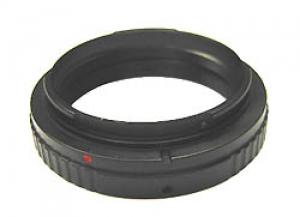
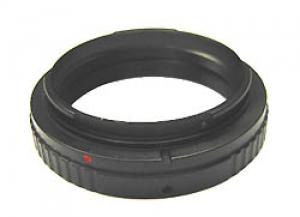
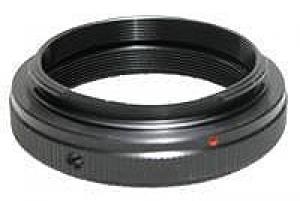
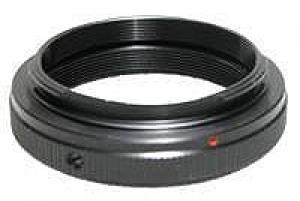
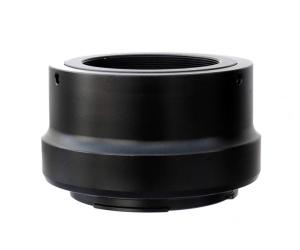
TS-Optics T Ring from M48 Thread to Sony / Minolta A Mount
EUR 22,90RRP EUR 27,90you save 17.9% (EUR 5,00)
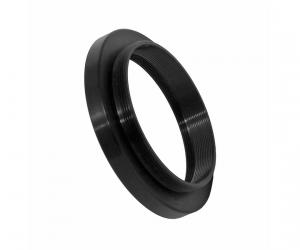

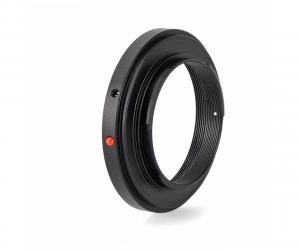
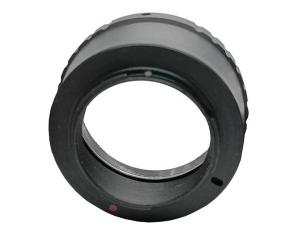
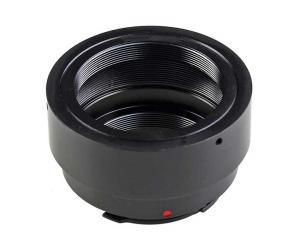

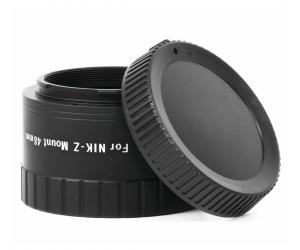
William M48 T-Ring for Nikon Z - bayonet for Nikon Z mirrorless system cameras

- Only 2 pcs left in stock
EUR 96,00
Books
Cleaning & Collimating
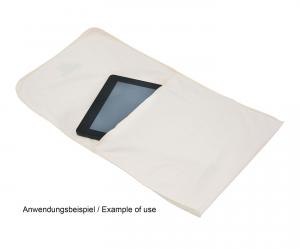
TS-Optics Optical Soft Microfibre Cleaning Cloth and Bag, 26x24 cm
EUR 7,50RRP EUR 11,95you save 37.2% (EUR 4,45)

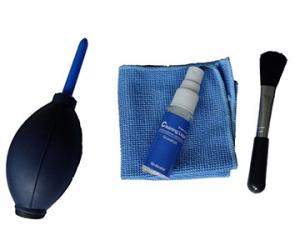
TS-Optics cleaning set, 4 pieces - bellows, brush, cleaning fluid, microfiber cloth
- Only 2 pcs left in stock
EUR 19,90
Finder & Accessories
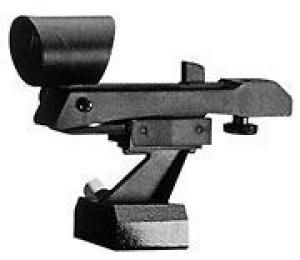
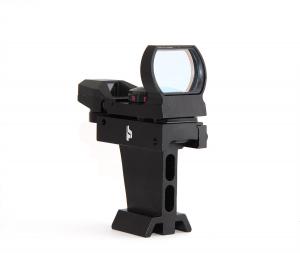
TS-Optics LED Finder Starpointer - Red Dot Sight for the Finder Shoe
EUR 21,90RRP EUR 39,00you save 43.8% (EUR 17,10)
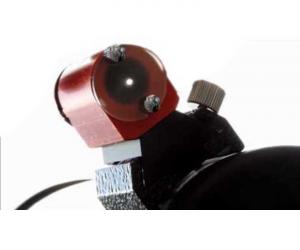
TS-Optics RDAC LED Red Dot Finder for astronomy and daytime observation
EUR 74,90RRP EUR 78,00you save 4% (EUR 3,10)
General Accessories

ZWO EAF focus motor with USB-C connection for power supply and data transfer
EUR 275,00RRP EUR 299,00you save 8% (EUR 24,00)
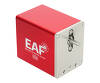
ZWO EAF focus motor with USB-C connection, Bluetooth and integrated rechargeable battery
EUR 399,00RRP EUR 439,00you save 9.1% (EUR 40,00)
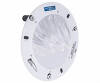
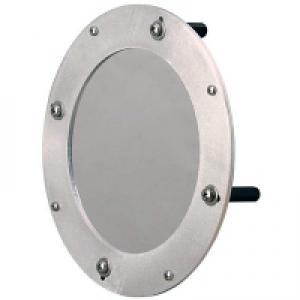
Baader Solar Filter ClearWhite visual - 240 mm aperture - for D=260-300 mm
- Only 2 pcs left in stock
EUR 222,00
Mounts
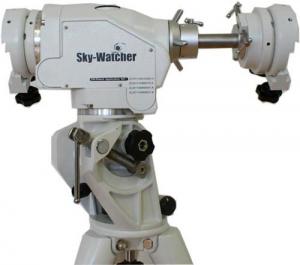
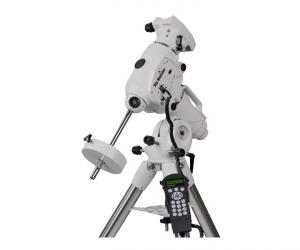
SkyWatcher EQ6-R PRO Synscan Equatorial GoTo Mount
- Only 3 pcs left in stock
EUR 1.799,00RRP EUR 1.999,00you save 10% (EUR 200,00)
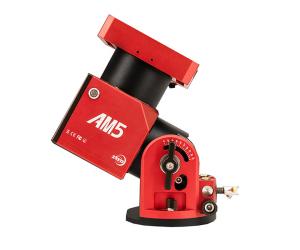
ZWO AM5N Harmonic Equatorial Mount Gen.2 - GoTo travel mount - Mount head
- Only 1 pcs left in stock
EUR 2.299,00RRP EUR 2.590,00you save 11.2% (EUR 291,00)

Skywatcher Wave 100i Strainwave mount - mount head for telescopes up to 15 kg
- Only 2 pcs left in stock
EUR 1.859,00

Photo Acessories
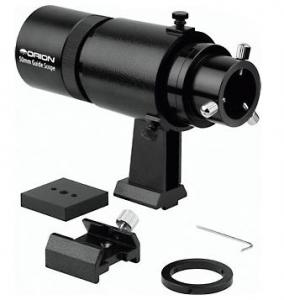
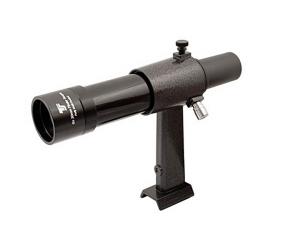
TS-Optics 50 mm Guiding Scope and Finder Scope with 1.25" Receptacle
EUR 94,90RRP EUR 109,00you save 12.9% (EUR 14,10)

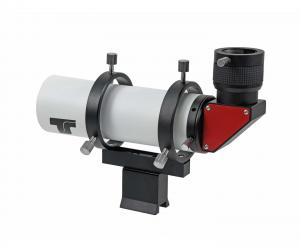
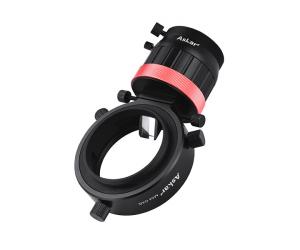
ASKAR Off-Axis Guider with T2, M48 and M54 Connectors at Telescope and Camera Side
- Only 3 pcs left in stock
EUR 239,00RRP EUR 359,00you save 33.4% (EUR 120,00)
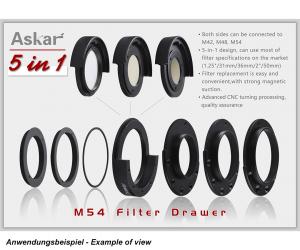
Askar multifunctional filter changer - filter drawer - 10-piece set
- Only 3 pcs left in stock
EUR 319,00
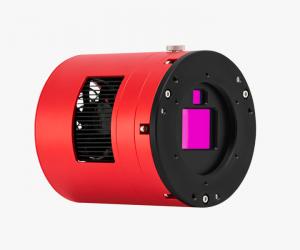
ZWO Color Camera ASI2600MC Duo - Sensor D=28.3 mm - with Guiding Sensor
- Only 2 pcs left in stock
EUR 1.990,00
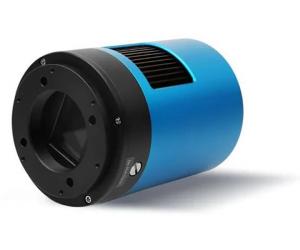
TS-Optics ToupTek Color Astro Camera 2600CP G2 Sony IMX571 Sensor D=28.3 mm
- Only 1 pcs left in stock
EUR 1.549,00RRP EUR 1.990,00you save 22.2% (EUR 441,00)
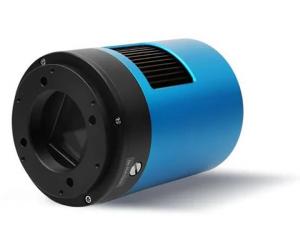
TS-Optics ToupTek Mono Astro Camera 2600MP G2 Sony IMX571 Sensor D=28.3 mm
EUR 1.949,00RRP EUR 2.480,00you save 21.4% (EUR 531,00)
Askar 52 mm F4 guide scope for the finder shoe with 1.25" and T2 connection - color black
- Only 2 pcs left in stock
EUR 229,00
ZWO ASI2600MC Color Astro Camera with Guiding Sensor and ASIAir - Sensor D=28.3 mm
EUR 2.290,00RRP EUR 2.716,00you save 15.7% (EUR 426,00)
Askar 52 mm f/4.8 Super ED Guide Scope - black
- Only 2 pcs left in stock
EUR 331,00RRP EUR 369,00you save 10.3% (EUR 38,00)
Askar Focal Plane Adjuster - Tilting Adapter with 18 mm length
- Only 1 pcs left in stock
EUR 216,00RRP EUR 299,00you save 27.8% (EUR 83,00)

ZWO Color Astro Camera ASI 2600MC-PRO cooled, Sensor D= 28.3 mm
- Only 1 pcs left in stock
EUR 1.790,00RRP EUR 2.590,00you save 30.9% (EUR 800,00)
Similar Products
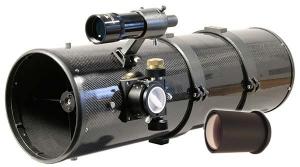

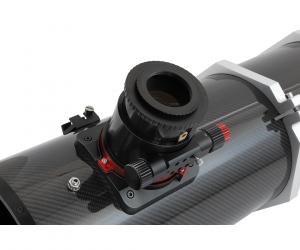
TS-Optics 8" 203 mm f/3.4 Parabolic Newtonian Astrograph - Carbon Tube
- Only 1 pcs left in stock
EUR 3.750,00
Askar N160 - 160/544 mm f/3.4 Newtonian Astrograph - with optics test
EUR 1.162,00RRP EUR 1.490,00you save 22% (EUR 328,00)
Reviews
