

- Telescopes
- Overview:
Telescopes - Achromatic Refractor
- Apochromatic Refractor
- Overview:
Apochromatic Refractor - ED Refractor - less color aberration than an achromatic
- SD APO - color free 2-element APO objective
- EDT APO - 3 element ED objective
- High End APO with 3-element APO objective - no color aberation
- Flatfield APO with flat field for Astrophotography
- All Apos and EDs from all manufacturers - large overview
- TS APO and ED from Japan with high quality optics
- Overview:
- Newtonian Telescopes
- Dobsonian Telescopes
- RC Ritchey Chretien Telescopes
- Casssegrain Telescopes
- Reflektor Telescopce with Lens Correcture
- Maksutov Cassegrain Telescopes
- GoTo Telescopes
- Smart Telescopes
- Solar Telescopes H-Alpha
- Overview:
- Mounts Tripods Rings Rails Power Supply ...
- Overview:
Mounts Tripods Rings Rails Power Supply ... - Mounts Equatorial with GoTo
- Mounts Equatorial without GoTo
- Mounts Azimutal with GoTo
- Mounts Azimutal without GoTo
- Mounts GoTo - Harmonic Drive
- Travel mounts for astro imaging
- Tripods Piers Polar Wedges
- Mount Control & Electronics
- Dovetail Clamps, Plates and Mount Adapters
- Tube Rings
- Power Supply
- Counterweights Balance Weights
- Mount Accessories - Other
- Overview:
- Telescope Accessories
- Overview:
Telescope Accessories - Eyepieces
- Barlows & Reducer Lenses
- Diagonal Mirrors and Prisms
- Binocular Viewers
- Finder Scopes
- Telescope Collimation and Test
- Cleaning Tools
- Transport and Storage
- Dust protection for Telescopes & Accessories
- Stray Light Protection
- Dewcaps and Heater
- Focusers, Adapters, Motorfocus
- Telescope DIY & Improvement
- Other telescope accessories
- Replacement Parts
- Overview:
- Filters
- Overview:
Filters - Color Filters and Color Filtersets
- Nebular Filters for Visual Observing
- Neutral-Density and Polfilter
- Photo Narrowband Nebular Filters
- Photo Broadband Filters
- Photo Planetary Filters
- Photo R-G-B and IR Cut Filters
- Photo - Filtersets
- Photometric Filters
- Clip Filter for DSLR Cameras
- Filter Wheels and Filterslider
- Solar Filters for white light
- Solarfilter for H-Alpha and Calcium
- Overview:
- Adaptors
- Overview:
Adaptors - Adapter 1,25" and 24,5mm
- Adapter 2"
- Adapter T2 - M42x0.75
- Adapter M48x0,75
- Adapter M54
- Adapter SC
- Adapter M63
- Adapter M68
- Adapter to other Threads
- Adapter Extensions
- Adapter camera bayonet
- Adapter Objective Filterthread
- Adapter Quick Changing , Rotation
- Adapter Eyepiece Projection
- Adapters Tilting
- Overview:
- Astrophotography and Photography
- Overview:
Astrophotography and Photography - Cooled Cameras
- Cameras without Cooling
- Deep-Sky Cameras uncooled
- Set-Offers Camera, Filter, Wheels
- Acessories for Cameras
- Travel mounts for astro imaging
- Imaging Correctors for Telescopes
- Autoguiding Cameras & Sets
- Everything for Guiding
- Focusing aids - Bahtinov mascs
- Flat Field foils and boxes
- Lenses for Cameras
- Piggyback Camera Holder
- Camera Bags, Photocases & more
- Digital Camera and Smartphone Adapter
- Other photo accessories
- Overview:
- Binoculars, Spotting Scopes, Microscopes, Range Finders
- Overview:
Binoculars, Spotting Scopes, Microscopes, Range Finders - Spotting Scopes and Acessories
- Roof Prism Binoculars
- Binoculars with Porro prisms
- Binoculars from 100mm Aperture
- Binoculars with 1,25 inch eyepieces
- TSMX APO Binoculars
- Binoculars for Astronomy
- Binoculars Hiking Bird watching
- Monoculars - Opera Binoculars
- Accessories for Binoculars
- Range Finders
- Microscopy
- Bags for Phototripods & Binoculars
- Overview:
- Phototripods and Binomounts
- Books, Software
- Overview:
Books, Software - Books for Astronomy Beginners
- Star Charts and Planispheres
- Books about our Solar System
- Observing Tips for Amateurs
- Popular Astronomy Literature
- Teaching material
- Astrophotography books
- Telescopes, Observatories, Construction
- Calendars Yearbooks
- Software, Star Charts
- Books for Microscopers
- Books Nature and Animals
- Nature Photography TimeLapse
- Overview:
- Night Vision, Magnifiers, Weather, Domes & more
- Beginner Astronomy and Gift Ideas
- Second Hand & Special Offers
- New products

manufacturers


Manufacturer: Sky Rover
Product number: TSAPO86PHQ
EUR1299.00new
EUR 1.299,00RRP EUR 1.599,00you save 18.8% (EUR 300,00)
incl. 19 % VAT (DE)
The VAT indicated refers to that applicable in Germany. After logging in, the VAT amount is adjusted to the applicable VAT of the stored delivery country. Therefore, the final price may vary accordingly.
excl. 13.95 € shipping costs (DE)
more details to the shipping costs ...Please log in to calculate shipping costs to your country.

There are no reviews for this product


- Details..
- Technical data..
- In the box..
- Download..
- Manufacturer infos..
- Safety informations..
Sky Rover 86 mm f/7 quadruplet apochromat with full image correction up to full frame format
Multipurpose AstrographSky Rover proudly introduces the new MA (Multipurpose Astrograph) series of telescopes. The 86MA is the inaugural model in this lineup. While maintaining the high standards of Sky Rover telescope, the 86MA features a native flat field design, integrating a triplet objective lens with a crescent-shaped field flattener through an optimized, unified optical system. The front lens group utilizes dual ED glass elements to enhance performance. Upholding Sky Rover´s stringent optical requirements, the MA series offers superior chromatic aberration control compared to similar products on the market, delivering finer image quality without compromising resolution. It supports full-frame imaging directly at prime focus - no need to calculate back focus - and also performs excellently with the addition of a 0.8x reducer. Compared with other imaging scopes in the Sky Rover lineup, the MA series is compatible with standard astronomical accessories such as diagonals and eyepieces, due to the generous working distance. It also supports advanced setups like binoviewers when used with an extender.
Thanks to its f/7 focal ratio, the MA series is forgiving in terms of focus precision, making it easier to achieve sharp, high-quality images. When used with the reducer/flattener, the image plane remains sufficiently flat in most cases. For added precision, Sky Rover thoughtfully designed a compact flange ring that allows for fine-tuning focus when using the reducer, ensuring excellent imaging results.
With a transport length of less than 50 cm, the telescope is very compact and at just under 5 kg, it can still be carried by smaller mounts such as the Skywatcher EQ5 or the Celestron AVX.
Optical Construction
Air-spaced quadruplet (four elements) includes two ED glass lenses - three elements are used for the objective, including one ED element. The second ED element is used for the corrector.
A true all-in-one: for visual and astrophotography alike
The 86MA multipurpose astrograph comes standard with a 2-inch adapter, as well as one focus extension tube, M54 adapter x1, M48 adapter x1 for convenient astrophotography use. Some of these components are required when using the reducer/flattener, so please do not discard them.

Visual: Fitted with an optional diagonal and eyepiece and so on.
Astrophotography: Allows direct camera attachment after the adapter - no field flattener needed.
Multiple accessory mounting positions

The dovetail slot on the handle allows attachment of a finderscope, guide scope, astro box, or other accessories.
A finderscope base is built into the side of the focuser.
Adjust the Flange Plate
The 86MA is equipped with a flange plate at the rear end, which can be used to adjust the focal plane when using a reducer. (Adjustment is not recommended unless necessary.) The specific adjustment method is as follows:
 1. Unscrew the 2-inch adapter at the rear end.
2. Remove the CAA locking screws.
3. After unscrewing the index ring, you will see three sets of flange plate screws at 120° intervals, which can be adjusted as needed.
The most important features of the 86 mm f/7 apo:
This is how we hand over the apo to the amateur:
Every single apo is checked in our technical department before it is put into storage, in order to guarantee a consistently high product quality.
Technical information:
Teleskop-Service has collected a lot of helpful information on refractors and made it available as a PDF file: refractors.pdf
| Aperture: | 86 mm |
| Focal length: | 602 mm |
| Focal ratio: | f/7 |
| Optical design: | 4-element apo with field flattening |
| Objective: | Air-spaced 3-element objective with one ED element |
| Corrector: | Permanently installed in the tube - ED element |
| Focuser: | 3.2" dual-speed R&P with 360° rotation |
| Connections focuser: | M63x1, M54x0.75, M48x0.75, 2", 1.25" |
| Focuser travel: | 85 mm |
| Working distance from base of M48 thread: | 117 mm |
| Diameter of dew shield: | 121 mm |
| Tube diameter: | 107 mm |
| Tube length: | 46 cm (dew shield retracted) to 56 mm (dew shield extended) |
| Net tube weight: | 3.5 kg |
| Tube weight incl. tube rings and dovetail bar: | 5 kg |
- 86 mm f/7 flatfield apochromat with CNC tube rings
- Dust caps
- Adapter to 2", 1.25", M54 and M48
- Extension tube
- Finder shoe is mounted on the focuser
- Handle with finder base
- GP style dovetail bar
- Bag
- TS Optical test

- Dust caps
- Adapter to 2", 1.25", M54 and M48
- Extension tube
- Finder shoe is mounted on the focuser
- Handle with finder base
- GP style dovetail bar
- Bag
- TS Optical test
Instructions for adapting the ZWO EAF to the focuser
The instructions language is German and English ... eaf-tsapo-phq.pdf| Manufacturer / Importeur: | Teleskop-Service Ransburg GmbH |
| Street: | Von-Myra-Str. 8 |
| ZIP / City: | 85599 Parsdorf |
| Country: | Germany |
| Telefon number: | +49 89 99228750 |
| Email: | info@teleskop-service.de |
| Website: | www.teleskop-express.de |
Safety informations: PDF Download
Recommended accessories
Accessories for mounts
Adaptors
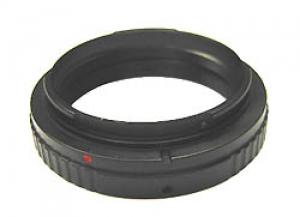
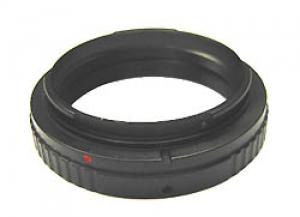
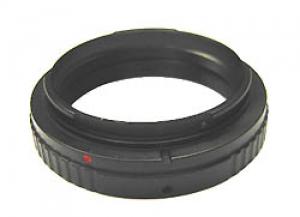
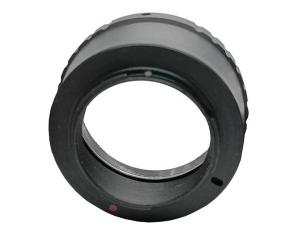
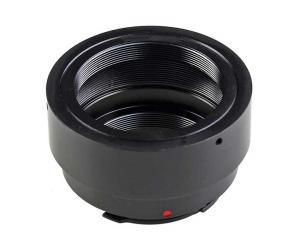
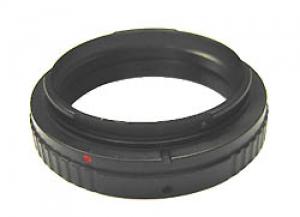
TS-Optics T Ring from M48 Thread to Sony / Minolta A Mount
EUR 22,90RRP EUR 27,90you save 17.9% (EUR 5,00)

Cleaning & Collimating
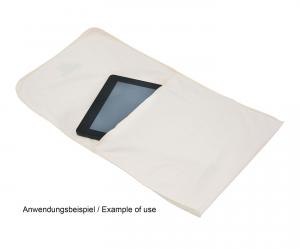
TS-Optics Optical Soft Microfibre Cleaning Cloth and Bag, 26x24 cm
EUR 7,50RRP EUR 11,95you save 37.2% (EUR 4,45)


Diagonal Mirrors & Prisms
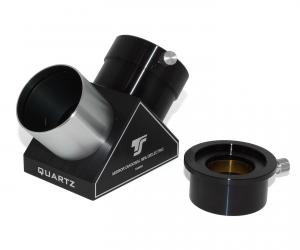
TS-Optics 2" Star Diagonal with 99% Reflection - FUSED QUARZ - 1/12 lambda
EUR 199,00RRP EUR 229,00you save 13.1% (EUR 30,00)
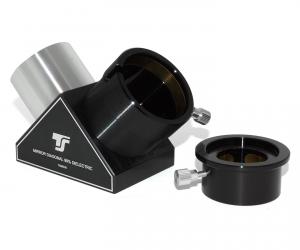
TS-Optics 2" Star Diagonal with 99% Reflection - 1/12 lambda
EUR 159,00RRP EUR 199,00you save 20.1% (EUR 40,00)
Finder & Accessories
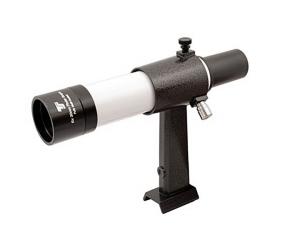
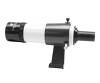
TS-Optics 8x50 Finder - straight view, white colour and with adjustable bracket
EUR 69,00RRP EUR 89,00you save 22.5% (EUR 20,00)
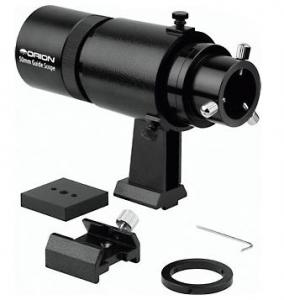
TS-Optics 50 mm Guiding Scope and Finder Scope with 1.25" Receptacle
EUR 94,90RRP EUR 109,00you save 12.9% (EUR 14,10)
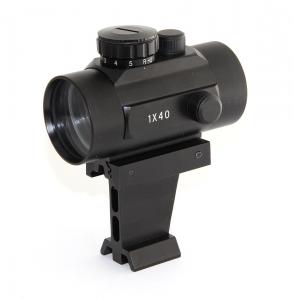
Special Offer: TS-Optics SkyfinderV LED Red Dot Finder - completely of metal
EUR 49,90RRP EUR 69,00you save 27.7% (EUR 19,10)
General Accessories
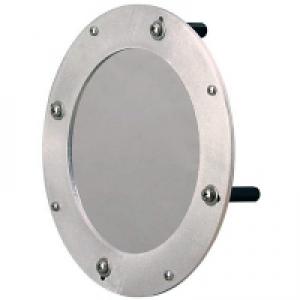
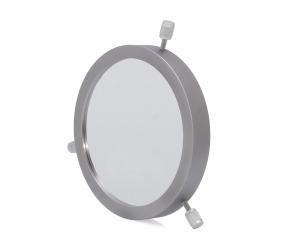
Euro EMC visual Solar Filter - D= 96 mm, for 103-146 mm telescope tubes

- Only 2 pcs left in stock
EUR 79,00


ZWO EAF focus motor with USB-C connection for power supply and data transfer
EUR 275,00RRP EUR 299,00you save 8% (EUR 24,00)
ZWO EAF focus motor with USB-C connection, Bluetooth and integrated rechargeable battery
EUR 399,00RRP EUR 439,00you save 9.1% (EUR 40,00)
Mounts
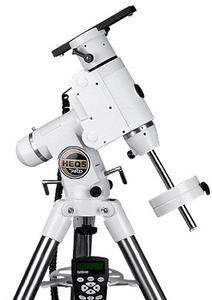
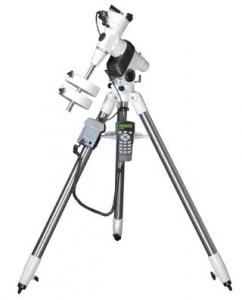
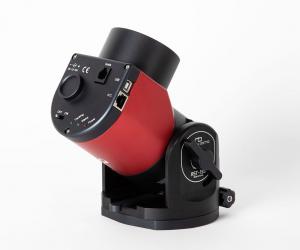
Rainbow Astro RST-135 GoTo Mount Red
- Only 2 pcs left in stock
EUR 4.999,00RRP EUR 5.703,00you save 12.3% (EUR 704,00)
Warpastron WD 17 Harmonic Direct Drive GoTo Mount for telescopes up to 20 kg
- Only 1 pcs left in stock
EUR 2.799,00
Photo Acessories
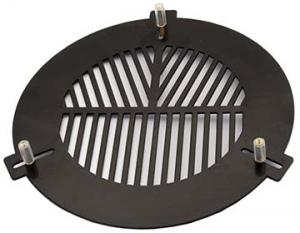
TS-Optics Bahtinov Mask for Astrophotography - D= 105 mm to 150 mm
EUR 19,90RRP EUR 31,00you save 35.8% (EUR 11,10)
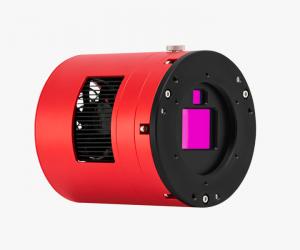
ZWO Color Camera ASI2600MC Duo - Sensor D=28.3 mm - with Guiding Sensor
- Only 1 pcs left in stock
EUR 1.990,00

Similar Products
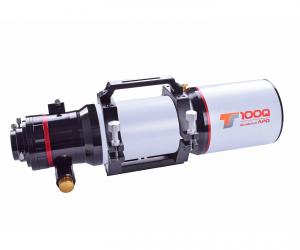
TS-Optics Imaging Star 100 mm f/5.8 Quadruplet Apo with field flatener - with optical test
EUR 2.299,00RRP EUR 2.790,00you save 17.6% (EUR 491,00)
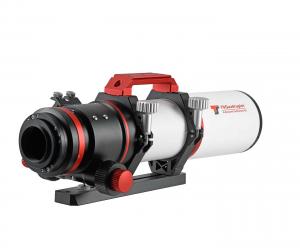
TS-Optics 70 mm f/5 Quadruplet Flatfield Apo with 3-Element FPL53 Objective
EUR 1.345,00RRP EUR 1.899,00you save 29.2% (EUR 554,00)
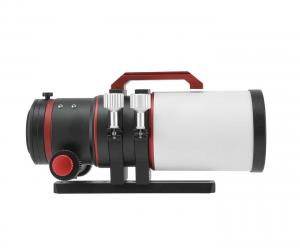
New, but: TS-Optics 90 mm f/5 Quintuplet Flatfield APO Refractor Telescope
EUR 1.990,00RRP EUR 2.490,00you save 20.1% (EUR 500,00)
Transport & Covers

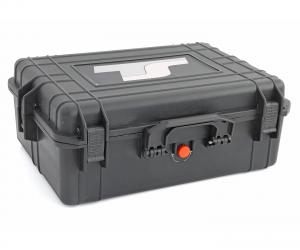
TS-Optics Outdoor Hard Case - Grid Foam - 57.0 x 42.5 x 21.5 cm interior
EUR 79,90RRP EUR 99,90you save 20% (EUR 20,00)

Reviews
