

- Telescopes
- Overview:
Telescopes - Achromatic Refractor
- Apochromatic Refractor
- Overview:
Apochromatic Refractor - ED Refractor - less color aberration than an achromatic
- SD APO - color free 2-element APO objective
- EDT APO - 3 element ED objective
- High End APO with 3-element APO objective - no color aberation
- Flatfield APO with flat field for Astrophotography
- All Apos and EDs from all manufacturers - large overview
- TS APO and ED from Japan with high quality optics
- Overview:
- Newtonian Telescopes
- Dobsonian Telescopes
- RC Ritchey Chretien Telescopes
- Casssegrain Telescopes
- Reflektor Telescopce with Lens Correcture
- Maksutov Cassegrain Telescopes
- GoTo Telescopes
- Smart Telescopes
- Solar Telescopes H-Alpha
- Overview:
- Mounts Tripods Rings Rails Power Supply ...
- Overview:
Mounts Tripods Rings Rails Power Supply ... - Mounts Equatorial with GoTo
- Mounts Equatorial without GoTo
- Mounts Azimutal with GoTo
- Mounts Azimutal without GoTo
- Mounts GoTo - Harmonic Drive
- Travel mounts for astro imaging
- Tripods Piers Polar Wedges
- Mount Control & Electronics
- Dovetail Clamps, Plates and Mount Adapters
- Tube Rings
- Power Supply
- Counterweights Balance Weights
- Mount Accessories - Other
- Overview:
- Telescope Accessories
- Overview:
Telescope Accessories - Eyepieces
- Barlows & Reducer Lenses
- Diagonal Mirrors and Prisms
- Binocular Viewers
- Finder Scopes
- Telescope Collimation and Test
- Cleaning Tools
- Transport and Storage
- Dust protection for Telescopes & Accessories
- Stray Light Protection
- Dewcaps and Heater
- Focusers, Adapters, Motorfocus
- Telescope DIY & Improvement
- Other telescope accessories
- Replacement Parts
- Overview:
- Filters
- Overview:
Filters - Color Filters and Color Filtersets
- Nebular Filters for Visual Observing
- Neutral-Density and Polfilter
- Photo Narrowband Nebular Filters
- Photo Broadband Filters
- Photo Planetary Filters
- Photo R-G-B and IR Cut Filters
- Photo - Filtersets
- Photometric Filters
- Clip Filter for DSLR Cameras
- Filter Wheels and Filterslider
- Solar Filters for white light
- Solarfilter for H-Alpha and Calcium
- Overview:
- Adaptors
- Overview:
Adaptors - Adapter 1,25" and 24,5mm
- Adapter 2"
- Adapter T2 - M42x0.75
- Adapter M48x0,75
- Adapter M54
- Adapter SC
- Adapter M63
- Adapter M68
- Adapter to other Threads
- Adapter Extensions
- Adapter camera bayonet
- Adapter Objective Filterthread
- Adapter Quick Changing , Rotation
- Adapter Eyepiece Projection
- Adapters Tilting
- Overview:
- Astrophotography and Photography
- Overview:
Astrophotography and Photography - Cooled Cameras
- Cameras without Cooling
- Deep-Sky Cameras uncooled
- Set-Offers Camera, Filter, Wheels
- Acessories for Cameras
- Travel mounts for astro imaging
- Imaging Correctors for Telescopes
- Autoguiding Cameras & Sets
- Everything for Guiding
- Focusing aids - Bahtinov mascs
- Flat Field foils and boxes
- Lenses for Cameras
- Piggyback Camera Holder
- Camera Bags, Photocases & more
- Digital Camera and Smartphone Adapter
- Other photo accessories
- Overview:
- Binoculars, Spotting Scopes, Microscopes, Range Finders
- Overview:
Binoculars, Spotting Scopes, Microscopes, Range Finders - Spotting Scopes and Acessories
- Roof Prism Binoculars
- Binoculars with Porro prisms
- Binoculars from 100mm Aperture
- Binoculars with 1,25 inch eyepieces
- TSMX APO Binoculars
- Binoculars for Astronomy
- Binoculars Hiking Bird watching
- Monoculars - Opera Binoculars
- Accessories for Binoculars
- Range Finders
- Microscopy
- Bags for Phototripods & Binoculars
- Overview:
- Phototripods and Binomounts
- Books, Software
- Overview:
Books, Software - Books for Astronomy Beginners
- Star Charts and Planispheres
- Books about our Solar System
- Observing Tips for Amateurs
- Popular Astronomy Literature
- Teaching material
- Astrophotography books
- Telescopes, Observatories, Construction
- Calendars Yearbooks
- Software, Star Charts
- Books for Microscopers
- Books Nature and Animals
- Nature Photography TimeLapse
- Overview:
- Night Vision, Magnifiers, Weather, Domes & more
- Beginner Astronomy and Gift Ideas
- Second Hand & Special Offers
- New products

manufacturers


Manufacturer: LUNT Solar
Product number: LS80MT-PPK
EUR5820.00new
EUR 5.820,00
incl. 19 % VAT (DE)
The VAT indicated refers to that applicable in Germany. After logging in, the VAT amount is adjusted to the applicable VAT of the stored delivery country. Therefore, the final price may vary accordingly.
excl. 45.95 € shipping costs (DE)
more details to the shipping costs ...Please log in to calculate shipping costs to your country.
Product expected to be available from 10.10.2026

There are no reviews for this product


- Details..
- Technical data..
- In the box..
- Manufacturer infos..
- Safety informations..
Lunt LS80MT/B1800 R&P Multipurpose APO Telescope for Sun and Night Sky
Modular designed multipurpose telescope, both for observing the sun in the H-alpha wavelength, as well as for night sky observations. Easy conversion between the different applications with a few simple steps. 2-element apochromatic telescope with FPL53 glass, 80 mm aperture and 560 mm focal length - excellent image quality for H-Alpha solar observation and also for observing the starry sky at night. Features an innovative air pressure tuning system, an additional double-stack filter for an FWHM of 0.28 Å (combined etalons), a 2"-rack-and-pinion focuser, and a B1800 blocking filter.Solar observing in H-alpha
The LS80MT/B1800 is a complete telescope for observing the sun in H-alpha light, with 80 mm clear aperture (no central obstruction) and 560 mm focal length. The H-alpha wavelength is the most impressive way to observe the sun, showing prominences, filaments and flares on the surface, and much more. An internal etalon filter achieves a bandwidth of 0.45 angstroms using the innovative Pressure-Tuner air pressure tuning system. Tuning is done by slightly changing the air pressure in a pressure chamber inside the telescope. This changes the refractive index of the air, making it easy to tune to the H-alpha line. The pressure tuner guarantees a homogeneous image, without central obstruction, and a permanently protected etalon without wear. A set of collimating lenses installed in the telescope ensures best performance.
The LS80MT Premium Plus comes with an SFTP internal double-stack module, connecting two pressure-tuned etalons in series and reducing the system bandpass to <0.28 angstroms. The dual independent Doppler True pressure tuners give you complete control over bandpass optimisation.
Two pressure-tuned etalons working in series, each with its own tuning knob, each responding instantly to adjustment. The internal architecture maintains perfect optical alignment across the entire bandpass adjustment range. The result is sub-quarter-angstrom performance with the tuning flexibility that only dual pressure systems can provide. This makes even more details on the Sun´s surface visible, particularly in the chromosphere, with a level of precision never before achieved.
The blocking filter is the B1800. The B1800 is well-suited for visual solar observation as well as for solar photography with cameras equipped with small sensor chips. The Sun is imaged frame-filling through the blocking filter, including the prominences. It has a diameter of 5.6 mm at the focal point. The mirror diagonal, into which the blocking filter is built, comes standard with both a receptacle for 1.25-inch eyepieces and a T2 mount for cameras. The telescope offers sufficient back focus for all standard cameras.
What can you see on the sun:
At <0.28 Å combined bandpass through 80 mm of premium FPL53 ED optics, the chromosphere reveals structures that instruments with simpler optics cannot match at any aperture. Filaments resolve into fine details, and active regions display rapidly changing features due to the strong magnetic fields. The rapid changes in filaments are visible in real time. Prominences reveal intertwining structures and flow patterns with the highest resolution.
Observing the starry night sky
Thanks to its modular design, the H-Alpha Etalon system can be removed from the telescope in just a few simple steps. The 2-element ED apochromatic refractor can then be used as a standard telescope with an 80 mm aperture and 560 mm focal length for observation and photography of the night sky. The FPL53 doublet lens provides a beautiful, low chromatic aberration image. Common 2" star diagonals can be used on the focuser of the telescope.
Versatile eyepiece
The included 7.2-21.5 mm zoom eyepiece allows for continuous magnification from the entire star field down to detailed observation of active regions without the need to change eyepieces - a critical advantage during observations where conditions change and you need to switch between different objects and magnifications without missing a single moment.
More applications
With optional accessories, the LS80MT offers even more possibilities!
- White-light solar observation
Once the H-Alpha unit has been removed, you can, of course, use either a solar filter installed in front of the objective lens or a Herschel wedge on the focuser to observe sunspots in white light.
- Solar observing at the Ca-K wavelength
The separately available "Lunt Ca-K Module with B1200 Blocking Filter in Star Diagonal for 2" Focuser" (item number LS12CaKMDd2) or the "Lunt Ca-K Module with B1800 Blocking Filter in Star Diagonal for 2" Focuser" (item number LS18CaKMDd2) can be used with the LS80MT to observe and photograph supergranulation and other effects visible at this wavelength on the Sun.
This makes the LS80MT a truly versatile, top-quality apochromatic telescope!
Additional information: What is the "Pressure Tuner" system?
The air pressure in our atmosphere varies depending on whether you are at sea level or, for example, on a mountain. The different conditions influence the wavelengths of light. Although this shift is minimal, it is clearly visible with filter bandwidths of less than one angstrom. If the filter is no longer precisely adjusted to the (shifted) H-alpha wavelength, the image of the sun in the telescope becomes blurred, and prominences and surface details are no longer visible.
The etalon filter systems must therefore be adapted to the conditions prevailing at the observation site. This correction, known as "tuning", is usually achieved by mechanically tilting the filter. With dimensions of just a few angstroms, it is of course not easy to achieve the required correction precisely by tilting. Because the filter is then no longer exactly straight in the light path, optical errors can also occur.
The "Pressure Tuner" air pressure system from Lunt Solar Systems takes a different approach. The etalon filter is no longer tilted; instead, the air pressure in the filter system is changed. Starting from the ambient pressure at which the etalon is set to a red-shifted H-alpha line, the tuning system can be used to compress the air surrounding the etalon. This changes the refractive index and shifts the transmission wavelength toward blue, enabling precise adjustment to the actual current wavelength within a range of +/- 0.4 angstrom.
This allows for much more sensitive adjustment, and the surfaces of the etalon always remain at the correct angle in the beam path.
| Design: | 2-element ED APO refractor with FPL53 element |
| Aperture: | 80 mm (no central obstruction) |
| Focal length: | 560 mm |
| FWHM of internal etalon (single-stacked): | 0.45 Å |
| FWHM of double-stack etalon: | 0.35 Å |
| FWHM of double-stacked (both etalons combined): | 0.28 Å |
| FWHM of blocking filter: | 6 Å |
| Tuning: | Air pressure tuning system (Pressure-Tuner) |
| Blocking filter: | B1800 with 1.25" and T2 connection, 18 mm clear aperture |
| Focuser: | 2" rack-and-pinion focuser with 1/10 speed reduction, compatible with ZWO EAF |
| Eyepiece (included): | Zoom eyepiece, 7.2 mm to 21.5 mm, 53° to 40° field of view, 15 mm eye relief |
| Magnification with included eyepiece: | 26x to 78x |
| Theoretical maximum magnification: | 160x |
| Tube rings: | Two tube rings with carrying handle |
| Solar finder: | Integrated into the carrying handle |
| Dovetail bar: | Vixen GP style, approx. 140 mm long |
| Length single-stacked with blocking filter and dew shield: | 100 cm |
| Length single-stacked without blocking filter and with dew shield retracted: | 80 cm |
| Manufacturer / Importeur: | Bresser GmbH |
| Street: | Gutenbergstraße 2 |
| ZIP / City: | 46414 Rhede |
| Country: | Germany |
| Telefon number: | +49 2872 80740 |
| Email: | info@bresser.de |
| Website: | www.bresser.de |
Safety informations: PDF Download
Recommended accessories
Cleaning & Collimating

Customers who bought this product also bought...
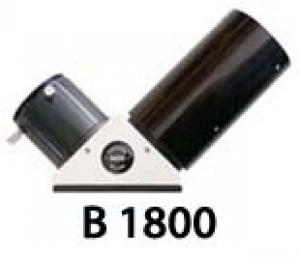
Lunt Ca-K Module with B1800 Blocking Filter in Star Diagonal for 2" Focuser

EUR 1.978,00RRP EUR 2.898,00you save 31.7% (EUR 920,00)

Lunt Ca-K Module with B1200 Blocking Filter in Star Diagonal for 2" Focuser
EUR 1.713,00RRP EUR 2.489,00you save 31.2% (EUR 776,00)
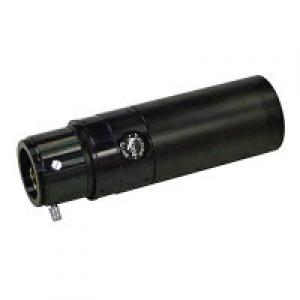
Lunt Ca-K Module with B1200 Blocking Filter - straight - for 2" focuser

EUR 1.854,00RRP EUR 2.498,00you save 25.8% (EUR 644,00)
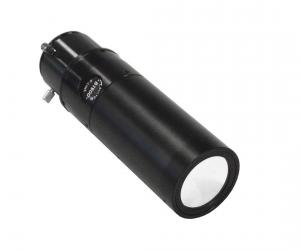
Lunt Ca-K Module with B1800 Blocking Filter - straight - for 2" focuser
EUR 1.978,00RRP EUR 2.898,00you save 31.7% (EUR 920,00)
Diagonal Mirrors & Prisms
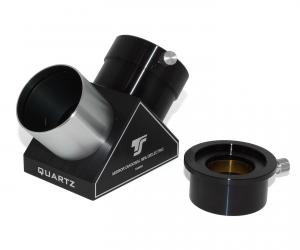
TS-Optics 2" Star Diagonal with 99% Reflection - FUSED QUARZ - 1/12 lambda
EUR 199,00RRP EUR 229,00you save 13.1% (EUR 30,00)
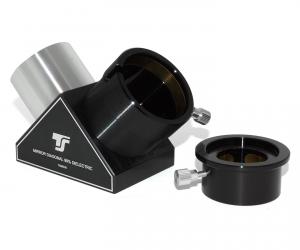
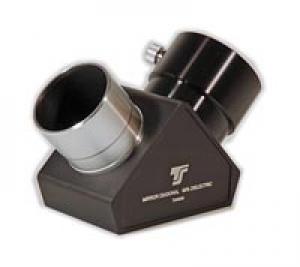
TS-Optics 2" Star Diagonal with 99% Reflection - 1/12 lambda
EUR 159,00RRP EUR 199,00you save 20.1% (EUR 40,00)
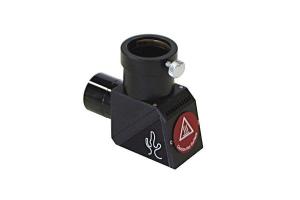
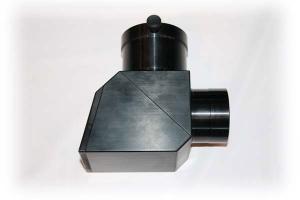
Lunt Solar Systems LS2HW 2" Herschel prism for solar observation
EUR 465,00RRP EUR 598,00you save 22.2% (EUR 133,00)
General Accessories

Lunt O-Ring for Pressure-Tuner of MT & THa Solar Telescopes - 32 mm

- Only 1 pcs left in stock
EUR 12,90
Mounts
Photo Acessories

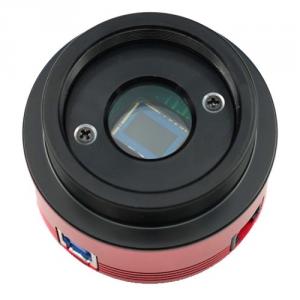
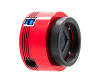
ZWO ASI585MM Mono USB3.0 astro camera - Sensor D=12.84 mm, 2.9 µm pixel size
- Only 1 pcs left in stock
EUR 699,00
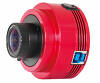
ZWO ASI676MM USB3.0 Monochrome Astro Camera - Sensor D=10.05 mm, 2.00 µm pixels
- Only 3 pcs left in stock
EUR 639,00
Similar Products
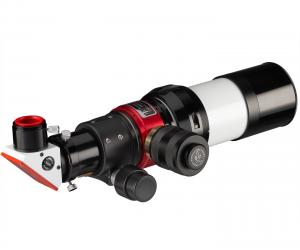
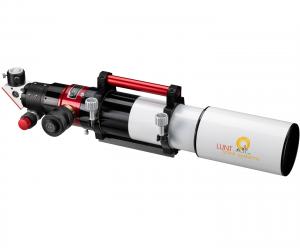
Lunt LS100MT/B1800 H-Alpha Telescope with R&P Focuser
EUR 6.192,00RRP EUR 6.999,00you save 11.5% (EUR 807,00)
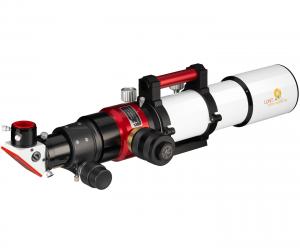
Lunt LS80MT/B1800RP Modular H-Alpha Telescope with Rack and Pinion Focuser
EUR 3.848,00RRP EUR 4.395,00you save 12.4% (EUR 547,00)




Transport & Covers
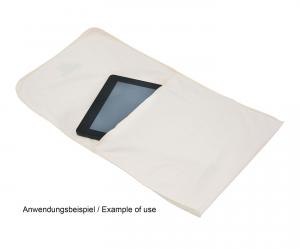
TS-Optics Optical Soft Microfibre Cleaning Cloth and Bag, 26x24 cm
EUR 7,50RRP EUR 11,95you save 37.2% (EUR 4,45)

Reviews
