

- Telescopes
- Overview:
Telescopes - Achromatic Refractor
- Apochromatic Refractor
- Overview:
Apochromatic Refractor - ED Refractor - less color aberration than an achromatic
- SD APO - color free 2-element APO objective
- EDT APO - 3 element ED objective
- High End APO with 3-element APO objective - no color aberation
- Flatfield APO with flat field for Astrophotography
- All Apos and EDs from all manufacturers - large overview
- TS APO and ED from Japan with high quality optics
- Overview:
- Newtonian Telescopes
- Dobsonian Telescopes
- RC Ritchey Chretien Telescopes
- Casssegrain Telescopes
- Reflektor Telescopce with Lens Correcture
- Maksutov Cassegrain Telescopes
- GoTo Telescopes
- Smart Telescopes
- Solar Telescopes H-Alpha
- Overview:
- Mounts Tripods Rings Rails Power Supply ...
- Overview:
Mounts Tripods Rings Rails Power Supply ... - Mounts Equatorial with GoTo
- Mounts Equatorial without GoTo
- Mounts Azimutal with GoTo
- Mounts Azimutal without GoTo
- Mounts GoTo - Harmonic Drive
- Travel mounts for astro imaging
- Tripods Piers Polar Wedges
- Mount Control & Electronics
- Dovetail Clamps, Plates and Mount Adapters
- Tube Rings
- Power Supply
- Counterweights Balance Weights
- Mount Accessories - Other
- Overview:
- Telescope Accessories
- Overview:
Telescope Accessories - Eyepieces
- Barlows & Reducer Lenses
- Diagonal Mirrors and Prisms
- Binocular Viewers
- Finder Scopes
- Telescope Collimation and Test
- Cleaning Tools
- Transport and Storage
- Dust protection for Telescopes & Accessories
- Stray Light Protection
- Dewcaps and Heater
- Focusers, Adapters, Motorfocus
- Telescope DIY & Improvement
- Other telescope accessories
- Replacement Parts
- Overview:
- Filters
- Overview:
Filters - Color Filters and Color Filtersets
- Nebular Filters for Visual Observing
- Neutral-Density and Polfilter
- Photo Narrowband Nebular Filters
- Photo Broadband Filters
- Photo Planetary Filters
- Photo R-G-B and IR Cut Filters
- Photo - Filtersets
- Photometric Filters
- Clip Filter for DSLR Cameras
- Filter Wheels and Filterslider
- Solar Filters for white light
- Solarfilter for H-Alpha and Calcium
- Overview:
- Adaptors
- Overview:
Adaptors - Adapter 1,25" and 24,5mm
- Adapter 2"
- Adapter T2 - M42x0.75
- Adapter M48x0,75
- Adapter M54
- Adapter SC
- Adapter M63
- Adapter M68
- Adapter to other Threads
- Adapter Extensions
- Adapter camera bayonet
- Adapter Objective Filterthread
- Adapter Quick Changing , Rotation
- Adapter Eyepiece Projection
- Adapters Tilting
- Overview:
- Astrophotography and Photography
- Overview:
Astrophotography and Photography - Cooled Cameras
- Cameras without Cooling
- Deep-Sky Cameras uncooled
- Set-Offers Camera, Filter, Wheels
- Acessories for Cameras
- Travel mounts for astro imaging
- Imaging Correctors for Telescopes
- Autoguiding Cameras & Sets
- Everything for Guiding
- Focusing aids - Bahtinov mascs
- Flat Field foils and boxes
- Lenses for Cameras
- Piggyback Camera Holder
- Camera Bags, Photocases & more
- Digital Camera and Smartphone Adapter
- Other photo accessories
- Overview:
- Binoculars, Spotting Scopes, Microscopes, Range Finders
- Overview:
Binoculars, Spotting Scopes, Microscopes, Range Finders - Spotting Scopes and Acessories
- Roof Prism Binoculars
- Binoculars with Porro prisms
- Binoculars from 100mm Aperture
- Binoculars with 1,25 inch eyepieces
- TSMX APO Binoculars
- Binoculars for Astronomy
- Binoculars Hiking Bird watching
- Monoculars - Opera Binoculars
- Accessories for Binoculars
- Range Finders
- Microscopy
- Bags for Phototripods & Binoculars
- Overview:
- Phototripods and Binomounts
- Books, Software
- Overview:
Books, Software - Books for Astronomy Beginners
- Star Charts and Planispheres
- Books about our Solar System
- Observing Tips for Amateurs
- Popular Astronomy Literature
- Teaching material
- Astrophotography books
- Telescopes, Observatories, Construction
- Calendars Yearbooks
- Software, Star Charts
- Books for Microscopers
- Books Nature and Animals
- Nature Photography TimeLapse
- Overview:
- Night Vision, Magnifiers, Weather, Domes & more
- Beginner Astronomy and Gift Ideas
- Second Hand & Special Offers
- New products

manufacturers


Manufacturer: ToupTek
Product number: AE676C
EUR349.00new
EUR 349,00RRP EUR 369,00you save 5.4% (EUR 20,00)
incl. 19 % VAT (DE)
The VAT indicated refers to that applicable in Germany. After logging in, the VAT amount is adjusted to the applicable VAT of the stored delivery country. Therefore, the final price may vary accordingly.
excl. 7.95 € shipping costs (DE)
more details to the shipping costs ...Please log in to calculate shipping costs to your country.
Product expected to be available from 26.11.2026

There are no reviews for this product


- Details..
- Technical data..
- In the box..
- Manufacturer infos..
- Safety informations..
TS ToupTek AE676 AstroEye USB3.0 Color Astronomy Camera with Sony IMX676 Sensor - D=10 mm, air-cooled
The AE676C is a versatile, high-performance astronomy camera designed to cover multiple astrophotography scenarios. Powered by the advanced Sony IMX676 sensor, it combines high infrared sensitivity, low read noise, and wide dynamic range to deliver outstanding results across planetary imaging, deep-sky photography, autoguiding, and all-sky monitoring.Key Advantages:
What Can You Capture with AE676C?
From planetary imaging and lunar details to deep-sky objects, meteors, Milky Way and all-sky monitoring, AE676C is a beginner-friendly multi-purpose astronomy camera designed for exploring different astrophotography possibilities.
Square Sensor for Flexible Framing
AE676C features a 1/1.6" square sensor, eliminating the hassle of aligning different aspect ratios. It offers the benefits of:
AE676C is especially well-suited for all-sky monitoring, meteor detection and Milky Way photography. The square format also pairs perfectly with fisheye and wide-angle lenses, maximizing image coverage.
Superior Infrared Sensitivity for Low-Light Imaging
Built on Sony Starvis 2 technology, the AE 676C delivers exceptional sensitivity in both visible and infrared light. It has outstanding performance in low-light environments. With high QE at 825 nm and beyond, AE676C shows near full-pixel response comparable to monochrome sensors.
AR-Coated Protective Window for Maximum Transmission
AE676C features a dual-sided AR-coated optical window:
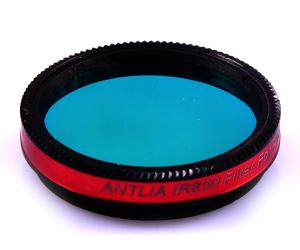
When paired with a long-pass filter starting at around 825 nm, such as the supplied ToupTek LP825, a TSIR850, the ASI850IRpass, or the Antlia IR850, it allows stunning infrared Milky Way imaging.
Modular Magnetic Cooling System for Flexible Use
Features a magnetic detachable rear cooling fan module for quick installation and removal. Single-stage TEC cooling combined with precision multi-channel heat dissipation supports long exposures while reducing thermal noise.
*Tested under long-exposure conditions at 25 °C ambient temperature with proper ventilation. Actual performance may vary depending on environmental conditions and exposure duration.
Native 12-bit ADC & Hardware ROI
Capture 12-bit images natively, with software pixel binning from 1×1 to 8×8 for flexible output resolutions, and hardware binning from 1×1 to 2×2. Hardware ROI allows higher frame rates by reducing the readout area. It achieves up to 993 FPS at reduced resolution (8-bit mode). So AE676C is perfect for high-speed planetary imaging and solar and lunar detail capture.
Stable Performance with 512 MB DDR3 Cache
Equipped with a 512 MB DDR3 buffer, AE676C ensures stable data transfer and helps prevent frame drops even under bandwidth limitations. Read noise is as low as 1.01 e- for clean backgrounds, while the 69.7 dB dynamic range preserves details in both bright and dark areas.
Seamless Multi-Mode Switching
The AE676C supports switching between HCG, LCG, and HDR modes, allowing independent selection according to different targets:
Flexible Mounting Options
Supports 1.25" barrel, CS mount, C mount, M42M and M42F interfaces for different optical systems and imaging accessories.
Software Compatibility
Connect via StellaVita App, ToupSky software, or use ASCOM, INDI and DirectShow SDK. Third-party software compatible with these SDKs can also integrate via drivers available on the ToupTek Astro official website.
Drivers and Software
ToupTek provides drivers and software for this camera, you can download them from here.
| Sensor: | Sony IMX676 1/1.6" color CMOS sensor |
| Resolution: | 3536 x 3536 pixels, 12.5 megapixels |
| Pixel size: | 2.0 µm |
| Sensor size: | 7.1 mm x 7.1 mm |
| Diagonal: | 10.04 mm (1/1.6" sensor format) |
| Frame rate: | up to approx. 31 FPS at 8-bit |
| ROI: | Supported |
| Distance to sensor: | 12.5 mm with CS thread / 17.5 mm with T2 adapter |
| Shutter type: | Rolling shutter |
| Protective window: | AR-coated glass, transmission from 400 nm to 1100 nm |
| Computer connection: | USB 3.0/USB 2.0 |
| QE: | ~83% |
| Maximum QE at: | 825 nm |
| Full-well capacity: | 10.536 ke- |
| Readout noise: | 3.79 to 1.01 e- |
| Bit resolution: | 12 bit ADC, 16 bit ADC @HDR |
| Cooling: | Single-stage thermoelectric cooling, fanless or with fan |
| Constant Temperature Mode: | Fanless, up to 5 °C below ambient temperature, vibration-free temperature control with ±0.1 °C stability |
| Deep-sky Mode: | With fan, up to 20 °C below ambient temperature, enhanced cooling for longer exposures |
| Memory: | 512 MB DDR3 |
| Mechanical connection: | 1.25" barrel, M42x0.75 male, M42x0.75 female, CS mount, C mount |
| Body diameter: | 63 mm |
| Body length: | 49.5 mm with T2 external thread, 43.5 mm without external thread |
- Camera body with adapter CS-mount-M42x0.75F
- Magnetic fan module
- M42x0.75F-M42x0.75F adapter ring (11 mm optical path)
- 1.25" extension tube
- CS-to-C adapter ring (5 mm optical path)
- CS-mount fisheye lens
- LP825 long pass filter cap
- USB3.0 high-speed cable, Type-A male to Type-C male (1.25 m)
- Magnetic fan module
- M42x0.75F-M42x0.75F adapter ring (11 mm optical path)
- 1.25" extension tube
- CS-to-C adapter ring (5 mm optical path)
- CS-mount fisheye lens
- LP825 long pass filter cap
- USB3.0 high-speed cable, Type-A male to Type-C male (1.25 m)
| Manufacturer / Importeur: | ToupTek Astro |
| Street: | 15F, Aoqiang Building 1, No. 6, Xiyuan 5th Rd., |
| ZIP / City: | 310030 Hangzhou, zhejiang |
| Country: | China |
| Telefon number: | |
| Email: | support@touptek.com |
| Website: | touptek-astro.com |
Safety informations: PDF Download
Recommended accessories
Adaptors
Cleaning & Collimating
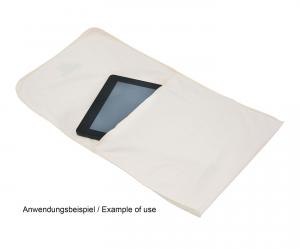
TS-Optics Optical Soft Microfibre Cleaning Cloth and Bag, 26x24 cm
EUR 7,50RRP EUR 11,95you save 37.2% (EUR 4,45)

Customers who bought this product also bought...
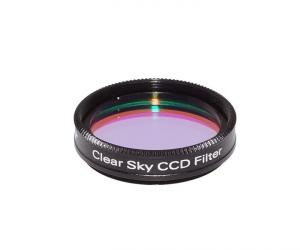
TS-Optics 1.25" CLS broad band nebula filter for photography
EUR 39,90RRP EUR 59,00you save 32.4% (EUR 19,10)
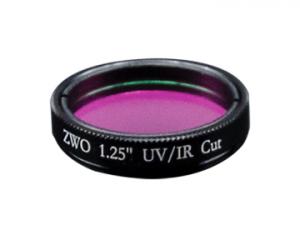

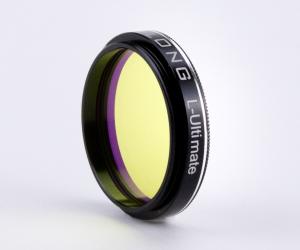
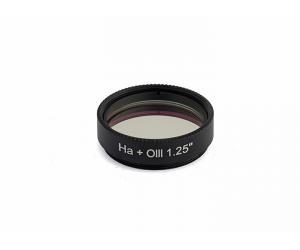
TS-Optics 1.25" tri-band narrow band nebula filter for astro cameras

- Only 2 pcs left in stock
EUR 119,00RRP EUR 149,00you save 20.1% (EUR 30,00)
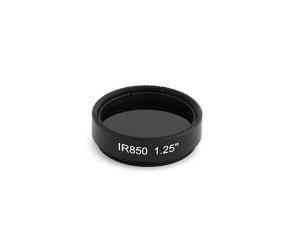
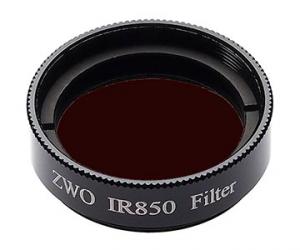
TS-Optics infrared pass filter from 850 nm for planetary photography, 1.25"
- Only 2 pcs left in stock
EUR 59,00
General Accessories

Mounts
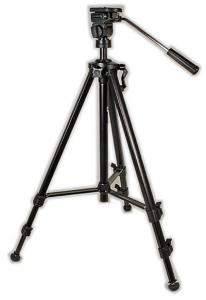
TS-Optics Photo Tripod with 3-Way Pan-Tilt Head - Working Height from 50 to 152 cm
EUR 22,90RRP EUR 39,90you save 42.6% (EUR 17,00)
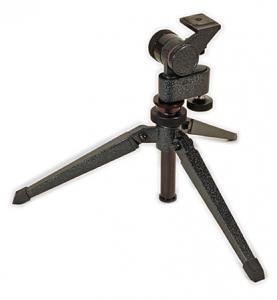
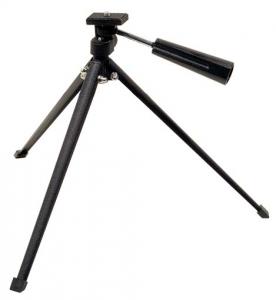
TS-Optics Tabletop Tripod - compact Travel Tripod with 23.5 cm Height - up to 1.5 kg
EUR 7,99RRP EUR 19,95you save 59.9% (EUR 11,96)
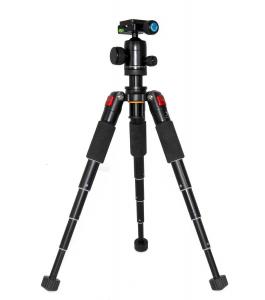
TS-Optics compact Photo Tripod and Traveltripod with Ball Head
EUR 74,90RRP EUR 105,00you save 28.7% (EUR 30,10)
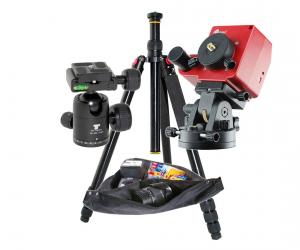
TS-Optics SkyTracker PRO Set - Tracking for night photography, time lapse, ...
- Only 2 pcs left in stock
EUR 619,00RRP EUR 649,00you save 4.6% (EUR 30,00)
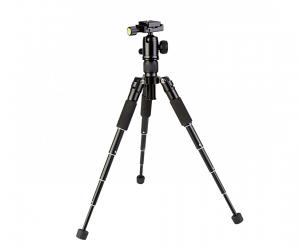
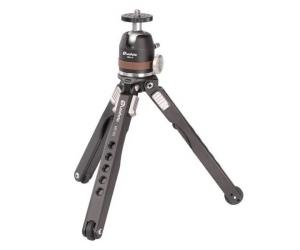
Leofoto Pocket Mini Tripod MT-03 + MBH-19
- Only 1 pcs left in stock
EUR 89,00RRP EUR 99,00you save 10.1% (EUR 10,00)
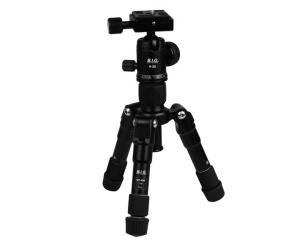

TS-Optics aluminum photo tripod with ball head - height adjustable up to 1500 mm
EUR 99,00RRP EUR 139,00you save 28.8% (EUR 40,00)
Photo Acessories
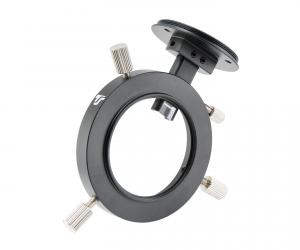
TS-Optics Off-Axis Guider TSOAG9 - Length only 9 mm
EUR 119,00RRP EUR 159,00you save 25.2% (EUR 40,00)
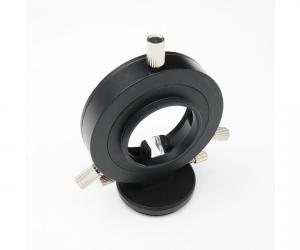
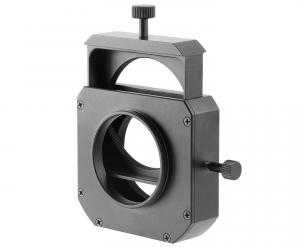
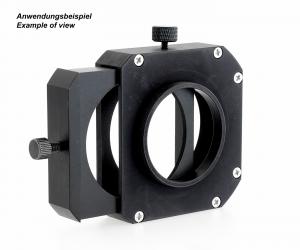
TS-Optics Filter Changer - Telescope Side M48 Female - Camera Side T2 Male
EUR 79,00RRP EUR 99,00you save 20.2% (EUR 20,00)

TS-Optics Off Axis Guider TSOAG16 - stable - length 16 mm
EUR 99,00RRP EUR 159,00you save 37.7% (EUR 60,00)
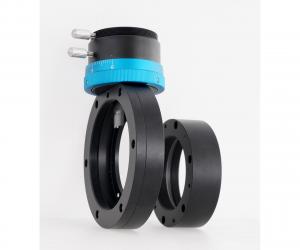
ToupTek Off-Axis Guider M48x0.75 Telescope Connection with Microfocussing
- Only 3 pcs left in stock
EUR 249,00
Similar Products

TS ToupTek AE676 AstroEye USB3.0 Monochrome Camera with Sony IMX676 Sensor - D=10 mm
EUR 369,00RRP EUR 399,00you save 7.5% (EUR 30,00)
Transport & Covers
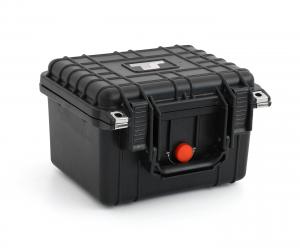
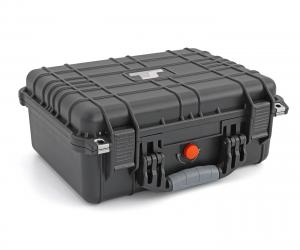
TS-Optics Outdoor Hard Case - Grid Foam - 40.7 x 33.0 x 17.4 cm interior
EUR 54,90RRP EUR 69,00you save 20.4% (EUR 14,10)
Reviews
Written by Georg Nikolaus Nyman
on 2026-09-08
"Eine Überraschung für mich - sehr gute Kamera mit einer erstaunlich guten Bildqualität"
Written by Olaf Jakubzik Reinartz
on 2026-08-12
"Universelle kleine Kamera"
