

- Telescopes
- Overview:
Telescopes - Achromatic Refractor
- Apochromatic Refractor
- Overview:
Apochromatic Refractor - ED Refractor - less color aberration than an achromatic
- SD APO - color free 2-element APO objective
- EDT APO - 3 element ED objective
- High End APO with 3-element APO objective - no color aberation
- Flatfield APO with flat field for Astrophotography
- All Apos and EDs from all manufacturers - large overview
- TS APO and ED from Japan with high quality optics
- Overview:
- Newtonian Telescopes
- Dobsonian Telescopes
- RC Ritchey Chretien Telescopes
- Casssegrain Telescopes
- Reflektor Telescopce with Lens Correcture
- Maksutov Cassegrain Telescopes
- GoTo Telescopes
- Smart Telescopes
- Solar Telescopes H-Alpha
- Overview:
- Mounts Tripods Rings Rails Power Supply ...
- Overview:
Mounts Tripods Rings Rails Power Supply ... - Mounts Equatorial with GoTo
- Mounts Equatorial without GoTo
- Mounts Azimutal with GoTo
- Mounts Azimutal without GoTo
- Mounts GoTo - Harmonic Drive
- Travel mounts for astro imaging
- Tripods Piers Polar Wedges
- Mount Control & Electronics
- Dovetail Clamps, Plates and Mount Adapters
- Tube Rings
- Power Supply
- Counterweights Balance Weights
- Mount Accessories - Other
- Overview:
- Telescope Accessories
- Overview:
Telescope Accessories - Eyepieces
- Barlows & Reducer Lenses
- Diagonal Mirrors and Prisms
- Binocular Viewers
- Finder Scopes
- Telescope Collimation and Test
- Cleaning Tools
- Transport and Storage
- Dust protection for Telescopes & Accessories
- Stray Light Protection
- Dewcaps and Heater
- Focusers, Adapters, Motorfocus
- Telescope DIY & Improvement
- Other telescope accessories
- Replacement Parts
- Overview:
- Filters
- Overview:
Filters - Color Filters and Color Filtersets
- Nebular Filters for Visual Observing
- Neutral-Density and Polfilter
- Photo Narrowband Nebular Filters
- Photo Broadband Filters
- Photo Planetary Filters
- Photo R-G-B and IR Cut Filters
- Photo - Filtersets
- Photometric Filters
- Clip Filter for DSLR Cameras
- Filter Wheels and Filterslider
- Solar Filters for white light
- Solarfilter for H-Alpha and Calcium
- Overview:
- Adaptors
- Overview:
Adaptors - Adapter 1,25" and 24,5mm
- Adapter 2"
- Adapter T2 - M42x0.75
- Adapter M48x0,75
- Adapter M54
- Adapter SC
- Adapter M63
- Adapter M68
- Adapter to other Threads
- Adapter Extensions
- Adapter camera bayonet
- Adapter Objective Filterthread
- Adapter Quick Changing , Rotation
- Adapter Eyepiece Projection
- Adapters Tilting
- Overview:
- Astrophotography and Photography
- Overview:
Astrophotography and Photography - Cooled Cameras
- Cameras without Cooling
- Deep-Sky Cameras uncooled
- Set-Offers Camera, Filter, Wheels
- Acessories for Cameras
- Travel mounts for astro imaging
- Imaging Correctors for Telescopes
- Autoguiding Cameras & Sets
- Everything for Guiding
- Focusing aids - Bahtinov mascs
- Flat Field foils and boxes
- Lenses for Cameras
- Piggyback Camera Holder
- Camera Bags, Photocases & more
- Digital Camera and Smartphone Adapter
- Other photo accessories
- Overview:
- Binoculars, Spotting Scopes, Microscopes, Range Finders
- Overview:
Binoculars, Spotting Scopes, Microscopes, Range Finders - Spotting Scopes and Acessories
- Roof Prism Binoculars
- Binoculars with Porro prisms
- Binoculars from 100mm Aperture
- Binoculars with 1,25 inch eyepieces
- TSMX APO Binoculars
- Binoculars for Astronomy
- Binoculars Hiking Bird watching
- Monoculars - Opera Binoculars
- Accessories for Binoculars
- Range Finders
- Microscopy
- Bags for Phototripods & Binoculars
- Overview:
- Phototripods and Binomounts
- Books, Software
- Overview:
Books, Software - Books for Astronomy Beginners
- Star Charts and Planispheres
- Books about our Solar System
- Observing Tips for Amateurs
- Popular Astronomy Literature
- Teaching material
- Astrophotography books
- Telescopes, Observatories, Construction
- Calendars Yearbooks
- Software, Star Charts
- Books for Microscopers
- Books Nature and Animals
- Nature Photography TimeLapse
- Overview:
- Night Vision, Magnifiers, Weather, Domes & more
- Beginner Astronomy and Gift Ideas
- Second Hand & Special Offers
- New products

manufacturers


Manufacturer: -TS Zubehör
Product number: TS432M
EUR766.00new
EUR 766,00
incl. 19 % VAT (DE)
The VAT indicated refers to that applicable in Germany. After logging in, the VAT amount is adjusted to the applicable VAT of the stored delivery country. Therefore, the final price may vary accordingly.
excl. 7.95 € shipping costs (DE)
more details to the shipping costs ...Please log in to calculate shipping costs to your country.

There are no reviews for this product


- Details..
- Technical data..
- In the box..
- Manufacturer infos..
- Safety informations..
Player One Apollo-M MAX SW astro camera for deep sky, sun and planets
The Player One Apollo-M MAX is a powerful MONO astro camera with the modern SONY IMX432 sensor. Due to the large pixels the camera offers a very high sensitivity and is especially suitable for somewhat slower telescopes. With long focal length telescopes, the camera is equally well suited for lunar, planetary and solar photography.Deep-sky astrophotography
The large sensor with 17.6 mm diagonal makes the camera well suited for photography of nebular objects, star clusters and galaxies. The Sony sensor is very sensitive, so they can image faint objects well in just a few minutes. The large 9 µm pixels make the camera suitable for telescopes with focal ratios of f/5 and fainter.
Moon and planetary photography
Due to the large 9 µm pixels, the focal length should be extended by Barlow lenses or eyepiece projection. We recommend an effective focal ratio around f/30 to f/40 to achieve good resolution. This can be achieved very well with good barlow lenses.
Sun and Moon are completely shown up to approx. 990 mm focal length. However, bear in mind that this leaves little room for tracking inaccuracies, which can cause the object to drift partially out of the field of view.
Sun photography
Despite the large pixels, the Player One Apollo-M MAX is very well suited for photographing the sun, both in white light and in H-alpha. Especially because H-alpha photography often requires artificially lengthening the focal length to achieve a practical aperture ratio, the large 9 µm pixels are not a disadvantage. A big advantage is that the IMX432 sensor does not have the problematic "banding". Against the Newtonian rings, in solar photography, the sensor tilting helps, which the Player One Apollo-M MAX offers as well.
Use as autoguider
At only 180 grams, the Player One Apollo-M MAX is a lightweight. It puts hardly any strain on the focuser. Of course, the camera offers the ST-4 autoguiding interface. A 2 meter autoguiding cable is also included.
Anti-reflective clear glass filter protects the sensor from dust
The clear glass filter prevents dust from getting to the sensor. It also lets UV and infrared through, so you can also do infrared photography with the camera. You have full control over what light hits the sensor with the right choice of contrast filters, nebula filters, or UV/IR blocking filters.
DPS technology against "Hot and Dead" Pixels
The DPS (Dead Pixel Suppression) analyzes dark shots and selects the interfering pixels. In the shots (Light), these spurious pixels are overwritten and then no longer appear. The image becomes smoother. The technology works similarly to a dark frame.
Air cooling - reduces sensor temperature
During shooting, the sensor heats up. The PCS dissipates the heat from the sensor via a thermal pad. This reduces the sensor temperature by up to 15 degrees compared to cameras without PCS.
Optional: ACS (Active Cooling System)
ACS is a external air-cooled system, designed for solar and big format planetary cameras which already has PCS (Passive Cooling System). ACS can provide much better temperature control. When camera has PCS + ACS, temperature is only 7 °C higher than ambient, camera body is a little warm but won´t be hot! ACS can not only be used in daylight for solar imaging, it also could be used in night for DSO lucky imaging.
Here you can find drivers, software, a manual for the camera and hints for solar photography
| Sensor: | CMOS sensor Sony IMX432 |
| Size: | 14.1 x 9.9 mm - diagonal 17.6 mm |
| Pixel size: | 9 µm |
| Resolution: | 1600 x 1100 pixels - 1.7 megapixels |
| Bit: | 12Bit |
| Power supply: | Via USB - no separate power supply necessary |
| Connection thread telescope side: | M42x0,75 T2 female thread |
| Distance sensor to thread: | 12.5 mm back focus |
| ST-4 autoguiding interface: | yes |
| max. frame rate: | 126 frames per second at full resolution with USB3.0 |
[[kein Bild]]
| Manufacturer / Importeur: | Teleskop-Service Ransburg GmbH |
| Street: | Von-Myra-Str. 8 |
| ZIP / City: | 85599 Parsdorf |
| Country: | Germany |
| Telefon number: | +49 89 99228750 |
| Email: | info@teleskop-service.de |
| Website: | www.teleskop-express.de |
Safety informations: PDF Download
Recommended accessories
Adaptors
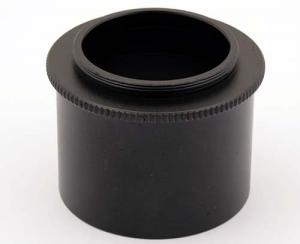



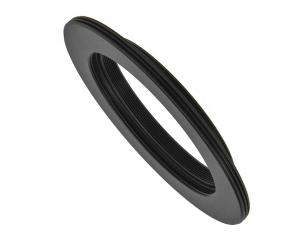
TS-Optics Adapter from M68 to T2 - M42x0,75 with 2" Filter Thread - short design

- Only 2 pcs left in stock
EUR 69,90
Cleaning & Collimating
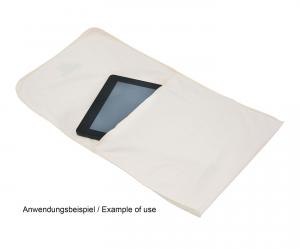
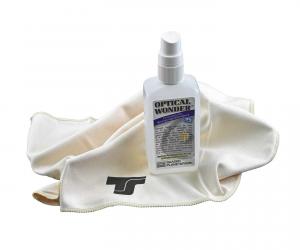
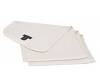
TS-Optics Optical Soft Microfibre Cleaning Cloth and Bag, 26x24 cm
EUR 7,50RRP EUR 11,95you save 37.2% (EUR 4,45)
Customers who bought this product also bought...
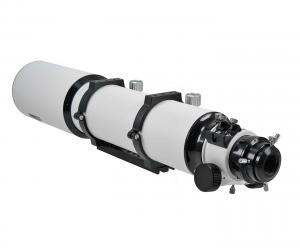
TS-Optics 115 mm f/7 EDT Triplet Apo with 2.5" RAP focuser and optics test
EUR 1.399,00RRP EUR 1.779,00you save 21.4% (EUR 380,00)
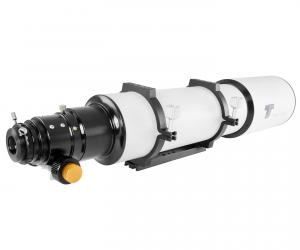
TS-Optics Doublet SD-APO 125 mm f/7.8 - FPL-53 / Lanthanum objective
EUR 1.499,00RRP EUR 1.990,00you save 24.7% (EUR 491,00)

General Accessories

Photo Acessories
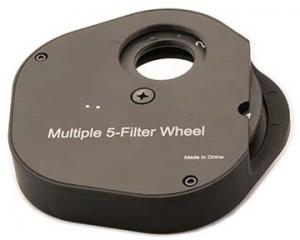
TS-Optics Filter Wheel for 5x 1.25" filters - T2 and 1.25" connection
EUR 89,00RRP EUR 149,00you save 40.3% (EUR 60,00)
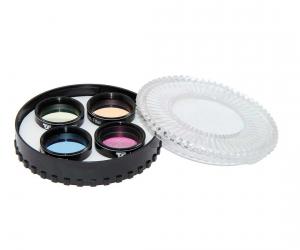
TS-Optics LRGB Filter Set 1.25" - Low-Profile Interference Filter Set
EUR 179,00RRP EUR 199,00you save 10.1% (EUR 20,00)
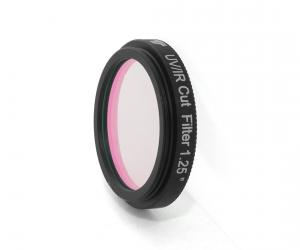
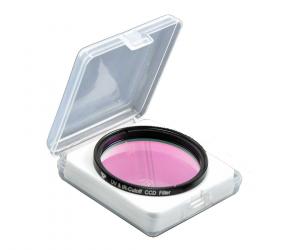
TS-Optics 1.25" UV & IR Cut Filter - Low Profile Filter Cell
EUR 27,90RRP EUR 34,90you save 20.1% (EUR 7,00)
Similar Products

TS-Optics Apollo-C USB3.0 COLOR Astro Camera Sensor D=13.4 mm
- Only 2 pcs left in stock
EUR 599,00RRP EUR 694,00you save 13.7% (EUR 95,00)

Transport & Covers
Reviews
