

- Telescopes
- Overview:
Telescopes - Achromatic Refractor
- Apochromatic Refractor
- Overview:
Apochromatic Refractor - ED Refractor - less color aberration than an achromatic
- SD APO - color free 2-element APO objective
- EDT APO - 3 element ED objective
- High End APO with 3-element APO objective - no color aberation
- Flatfield APO with flat field for Astrophotography
- All Apos and EDs from all manufacturers - large overview
- TS APO and ED from Japan with high quality optics
- Overview:
- Newtonian Telescopes
- Dobsonian Telescopes
- RC Ritchey Chretien Telescopes
- Casssegrain Telescopes
- Reflektor Telescopce with Lens Correcture
- Maksutov Cassegrain Telescopes
- GoTo Telescopes
- Smart Telescopes
- Solar Telescopes H-Alpha
- Overview:
- Mounts Tripods Rings Rails Power Supply ...
- Overview:
Mounts Tripods Rings Rails Power Supply ... - Mounts Equatorial with GoTo
- Mounts Equatorial without GoTo
- Mounts Azimutal with GoTo
- Mounts Azimutal without GoTo
- Mounts GoTo - Harmonic Drive
- Travel mounts for astro imaging
- Tripods Piers Polar Wedges
- Mount Control & Electronics
- Dovetail Clamps, Plates and Mount Adapters
- Tube Rings
- Power Supply
- Counterweights Balance Weights
- Mount Accessories - Other
- Overview:
- Telescope Accessories
- Overview:
Telescope Accessories - Eyepieces
- Barlows & Reducer Lenses
- Diagonal Mirrors and Prisms
- Binocular Viewers
- Finder Scopes
- Telescope Collimation and Test
- Cleaning Tools
- Transport and Storage
- Dust protection for Telescopes & Accessories
- Stray Light Protection
- Dewcaps and Heater
- Focusers, Adapters, Motorfocus
- Telescope DIY & Improvement
- Other telescope accessories
- Replacement Parts
- Overview:
- Filters
- Overview:
Filters - Color Filters and Color Filtersets
- Nebular Filters for Visual Observing
- Neutral-Density and Polfilter
- Photo Narrowband Nebular Filters
- Photo Broadband Filters
- Photo Planetary Filters
- Photo R-G-B and IR Cut Filters
- Photo - Filtersets
- Photometric Filters
- Clip Filter for DSLR Cameras
- Filter Wheels and Filterslider
- Solar Filters for white light
- Solarfilter for H-Alpha and Calcium
- Overview:
- Adaptors
- Overview:
Adaptors - Adapter 1,25" and 24,5mm
- Adapter 2"
- Adapter T2 - M42x0.75
- Adapter M48x0,75
- Adapter M54
- Adapter SC
- Adapter M63
- Adapter M68
- Adapter to other Threads
- Adapter Extensions
- Adapter camera bayonet
- Adapter Objective Filterthread
- Adapter Quick Changing , Rotation
- Adapter Eyepiece Projection
- Adapters Tilting
- Overview:
- Astrophotography and Photography
- Overview:
Astrophotography and Photography - Cooled Cameras
- Cameras without Cooling
- Deep-Sky Cameras uncooled
- Set-Offers Camera, Filter, Wheels
- Acessories for Cameras
- Travel mounts for astro imaging
- Imaging Correctors for Telescopes
- Autoguiding Cameras & Sets
- Everything for Guiding
- Focusing aids - Bahtinov mascs
- Flat Field foils and boxes
- Lenses for Cameras
- Piggyback Camera Holder
- Camera Bags, Photocases & more
- Digital Camera and Smartphone Adapter
- Other photo accessories
- Overview:
- Binoculars, Spotting Scopes, Microscopes, Range Finders
- Overview:
Binoculars, Spotting Scopes, Microscopes, Range Finders - Spotting Scopes and Acessories
- Roof Prism Binoculars
- Binoculars with Porro prisms
- Binoculars from 100mm Aperture
- Binoculars with 1,25 inch eyepieces
- TSMX APO Binoculars
- Binoculars for Astronomy
- Binoculars Hiking Bird watching
- Monoculars - Opera Binoculars
- Accessories for Binoculars
- Range Finders
- Microscopy
- Bags for Phototripods & Binoculars
- Overview:
- Phototripods and Binomounts
- Books, Software
- Overview:
Books, Software - Books for Astronomy Beginners
- Star Charts and Planispheres
- Books about our Solar System
- Observing Tips for Amateurs
- Popular Astronomy Literature
- Teaching material
- Astrophotography books
- Telescopes, Observatories, Construction
- Calendars Yearbooks
- Software, Star Charts
- Books for Microscopers
- Books Nature and Animals
- Nature Photography TimeLapse
- Overview:
- Night Vision, Magnifiers, Weather, Domes & more
- Beginner Astronomy and Gift Ideas
- Second Hand & Special Offers
- New products

manufacturers


Manufacturer: Astronomik Filter
Product number: 8H11TN
EUR679.00new
EUR 679,00
incl. 19 % VAT (DE)
The VAT indicated refers to that applicable in Germany. After logging in, the VAT amount is adjusted to the applicable VAT of the stored delivery country. Therefore, the final price may vary accordingly.
excl. 7.95 € shipping costs (DE)
more details to the shipping costs ...Please log in to calculate shipping costs to your country.

There are no reviews for this product


- Details..
- Technical data..
- In the box..
- Manufacturer infos..
- Safety informations..
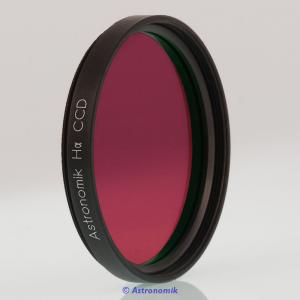
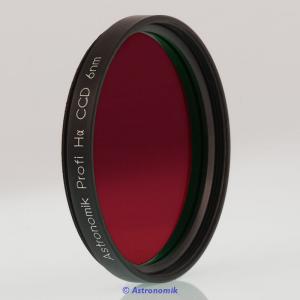
Astronomik Filter H-alpha 4 nm - M48 (2")
The Astronomik H-alpha filter is ideal for imaging hydrogen nebulae from light-polluted and dark observation sites. It significantly enhances the contrast between objects emitting light at 656 nm (H-alpha line) and the sky background. The Astronomik H-alpha filter blocks all emission lines from high- and low-pressure sodium (Na) and mercury (Hg) vapour lamps, the maxima of typical LED lights, most lines of natural airglow and distracting moonlight.The filter effectively blocks all unwanted light from wavelengths other than 656 nm from ultraviolet (UV) to infrared (IR).
The Astronomik H-alpha filter MUST NOT BE USED for solar observation!
Why 4 nm?
The choice between 12 nm, 6 nm and 4 nm Full-Width-Half-Maximum (FWHM) filters depends on your imaging conditions and camera type. There is no universal "best" option - each FWHM serves a specific purpose.
The new 4 nm line filters are the first choice for all astrophotographers who take pictures under extremely bright skies, for example from their balcony or terrace in the city. Like all Astronomik filters, the new 4 nm filters are optimized for use with dedicated CMOS astro cameras as well as modern DSLR and mirrorless system cameras.
Due to the low full width at half maximum, the number of stars in the image field is greatly reduced. Compared to images taken with a 12 nm filter, only a third of the stars are visible, and even extremely bright stars are only very small. The 4 nm filters are therefore also the first choice for overview images of the Milky Way, where the large number of stars would otherwise make it very difficult to see the nebulae.
The filters are also the right tool if you have a camera with very low dark current, allowing you to take very long exposures without significant background signal.
MFR coating specially developed by Astronomik
The new 4 nm filters are also produced with the proven MFR coating.
The Astronomik MFR coating ensures images free of any halos and razor-sharp stars. You get images with extremely high contrast and minimized stray light thanks to the best out-of-band blocking across the entire wavelength range from UV to IR.
In addition, the MFR coating allows Astronomik narrowband emission line filters to be used with almost all instruments. This means that customers do not have to purchase different filters for different focal ratios, as is the case with almost all competitors. Unlike filters from other manufacturers, which often require special "high-speed" versions, Astronomik´s MFR filters retain their transmission properties on both fast optics and optics with lower light intensity.
Size of filter
Astronomik filters come in a wide range of standard sizes, both mounted and unmounted, to suit various optical setups and cameras.
This filter is a mounted filter in a threaded 2" cell (M48 x 0.75 thread).
Technical Data:
Thanks to the high-precision machining of the carrier substrate, all Astronomik filters are parfocal. The wedge errors far below all common tolerances. Astronomik filters are diffraction-limited, ensuring that the optical performance (resolution and contrast) of your telescope is not compromised. Therefore, issues concerning focal distances and the exact alignment of images from each color channel are therefore effectively eliminated.
All Astronomik filters are ideal for modern cameras, including both CMOS- and CCD-based models, ensuring you capture the best possible images with your equipment. Sharpness, contrast, and the absence of any reflections and halos are guaranteed. Even with bright stars in the field of view, nebulae and galaxies will be captured with the finest structures. The Astronomik MFR coating is designed for optimal performance across a wide range of focal ratios of the optics used.
Every Astronomik filter undergoes a rigorous quality control process before delivery. Additionally, each Astronomik Narrowband-Emissionline filter is measured using a high-end PerkinElmer Spectrophotometer to ensure it meets the specifications published on our website. On the back of each Narrowband-Emissionline filter box, you will find a label detailing the precise spectral data for that specific filter, including the maximum transmission and the recommended range of focal ratios.
Filter transmission curve:

| Guaranteed transmission at the H-alpha line (656 nm): | over 90% |
| Typical transmission at the H-alpha line (656 nm): | 93% |
| FWHM: | 4 nm |
| Carrier material: | optically polished substrate |
| Glass thickness: | 1 mm |
| Parfocal: | with other Astronomik filters |
| Anti reflective coating: | completely resistant against high humidity, scratches and aging effects |
| Material of cell: | aluminium |
| Manufacturer / Importeur: | Vesting e.K. |
| Street: | Storchenweg 6 |
| ZIP / City: | 21217 Seevetal |
| Country: | Germany |
| Telefon number: | +49 40 5114348 |
| Email: | astro@astro-shop.com |
| Website: | www.astro-shop.com |
Safety informations: PDF Download
Recommended accessories
Cleaning & Collimating

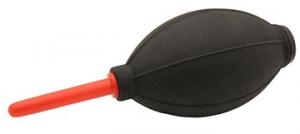
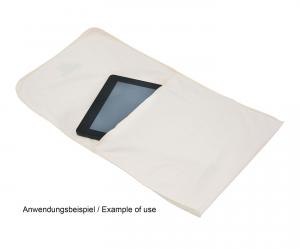
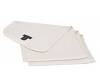
TS-Optics Optical Soft Microfibre Cleaning Cloth and Bag, 26x24 cm
EUR 7,50RRP EUR 11,95you save 37.2% (EUR 4,45)
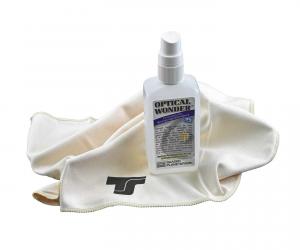
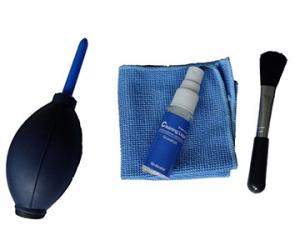
TS-Optics cleaning set, 4 pieces - bellows, brush, cleaning fluid, microfiber cloth

- Only 2 pcs left in stock
EUR 19,90
Customers who bought this product also bought...
Similar Products


Reviews
