

- Telescopes
- Overview:
Telescopes - Achromatic Refractor
- Apochromatic Refractor
- Overview:
Apochromatic Refractor - ED Refractor - less color aberration than an achromatic
- SD APO - color free 2-element APO objective
- EDT APO - 3 element ED objective
- High End APO with 3-element APO objective - no color aberation
- Flatfield APO with flat field for Astrophotography
- All Apos and EDs from all manufacturers - large overview
- TS APO and ED from Japan with high quality optics
- Overview:
- Newtonian Telescopes
- Dobsonian Telescopes
- RC Ritchey Chretien Telescopes
- Casssegrain Telescopes
- Reflektor Telescopce with Lens Correcture
- Maksutov Cassegrain Telescopes
- GoTo Telescopes
- Smart Telescopes
- Solar Telescopes H-Alpha
- Overview:
- Mounts Tripods Rings Rails Power Supply ...
- Overview:
Mounts Tripods Rings Rails Power Supply ... - Mounts Equatorial with GoTo
- Mounts Equatorial without GoTo
- Mounts Azimutal with GoTo
- Mounts Azimutal without GoTo
- Mounts GoTo - Harmonic Drive
- Travel mounts for astro imaging
- Tripods Piers Polar Wedges
- Mount Control & Electronics
- Dovetail Clamps, Plates and Mount Adapters
- Tube Rings
- Power Supply
- Counterweights Balance Weights
- Mount Accessories - Other
- Overview:
- Telescope Accessories
- Overview:
Telescope Accessories - Eyepieces
- Barlows & Reducer Lenses
- Diagonal Mirrors and Prisms
- Binocular Viewers
- Finder Scopes
- Telescope Collimation and Test
- Cleaning Tools
- Transport and Storage
- Dust protection for Telescopes & Accessories
- Stray Light Protection
- Dewcaps and Heater
- Focusers, Adapters, Motorfocus
- Telescope DIY & Improvement
- Other telescope accessories
- Replacement Parts
- Overview:
- Filters
- Overview:
Filters - Color Filters and Color Filtersets
- Nebular Filters for Visual Observing
- Neutral-Density and Polfilter
- Photo Narrowband Nebular Filters
- Photo Broadband Filters
- Photo Planetary Filters
- Photo R-G-B and IR Cut Filters
- Photo - Filtersets
- Photometric Filters
- Clip Filter for DSLR Cameras
- Filter Wheels and Filterslider
- Solar Filters for white light
- Solarfilter for H-Alpha and Calcium
- Overview:
- Adaptors
- Overview:
Adaptors - Adapter 1,25" and 24,5mm
- Adapter 2"
- Adapter T2 - M42x0.75
- Adapter M48x0,75
- Adapter M54
- Adapter SC
- Adapter M63
- Adapter M68
- Adapter to other Threads
- Adapter Extensions
- Adapter camera bayonet
- Adapter Objective Filterthread
- Adapter Quick Changing , Rotation
- Adapter Eyepiece Projection
- Adapters Tilting
- Overview:
- Astrophotography and Photography
- Overview:
Astrophotography and Photography - Cooled Cameras
- Cameras without Cooling
- Deep-Sky Cameras uncooled
- Set-Offers Camera, Filter, Wheels
- Acessories for Cameras
- Travel mounts for astro imaging
- Imaging Correctors for Telescopes
- Autoguiding Cameras & Sets
- Everything for Guiding
- Focusing aids - Bahtinov mascs
- Flat Field foils and boxes
- Lenses for Cameras
- Piggyback Camera Holder
- Camera Bags, Photocases & more
- Digital Camera and Smartphone Adapter
- Other photo accessories
- Overview:
- Binoculars, Spotting Scopes, Microscopes, Range Finders
- Overview:
Binoculars, Spotting Scopes, Microscopes, Range Finders - Spotting Scopes and Acessories
- Roof Prism Binoculars
- Binoculars with Porro prisms
- Binoculars from 100mm Aperture
- Binoculars with 1,25 inch eyepieces
- TSMX APO Binoculars
- Binoculars for Astronomy
- Binoculars Hiking Bird watching
- Monoculars - Opera Binoculars
- Accessories for Binoculars
- Range Finders
- Microscopy
- Bags for Phototripods & Binoculars
- Overview:
- Phototripods and Binomounts
- Books, Software
- Overview:
Books, Software - Books for Astronomy Beginners
- Star Charts and Planispheres
- Books about our Solar System
- Observing Tips for Amateurs
- Popular Astronomy Literature
- Teaching material
- Astrophotography books
- Telescopes, Observatories, Construction
- Calendars Yearbooks
- Software, Star Charts
- Books for Microscopers
- Books Nature and Animals
- Nature Photography TimeLapse
- Overview:
- Night Vision, Magnifiers, Weather, Domes & more
- Beginner Astronomy and Gift Ideas
- Second Hand & Special Offers
- New products

manufacturers


Manufacturer: Baader
Product number: BA2420400
EUR39.00new
EUR 39,00
incl. 19 % VAT (DE)
The VAT indicated refers to that applicable in Germany. After logging in, the VAT amount is adjusted to the applicable VAT of the stored delivery country. Therefore, the final price may vary accordingly.
excl. 7.95 € shipping costs (DE)
more details to the shipping costs ...Please log in to calculate shipping costs to your country.

There are no reviews for this product


- Details..
- Technical data..
- In the box..
- Download..
- Manufacturer infos..
- Safety informations..
Baader Solar Projection Screen (BSPS)
A safe way to observe the sun with small groups
The Baader Solar Projection Screen (BSPS) provides a safe way of solar projection and allows small groups to observe the Sun together. The projection screen is ideal for observing solar activity with sunspots in white light as well as following the course of solar eclipses.
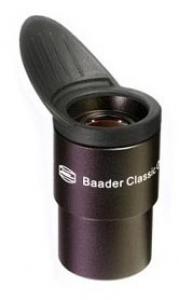
It consists of a rear projection screen and a T2 thread for connection to common eyepiece projection adapters. The screen was developed and tested with the Baader OPFA - Eyepiece Projection adapter (I - VII) (various versions available) . When used with the matching Baader Classic Ortho eyepieces on refractors with focal lengths between 250 and 1200 mm, it produces a solar image that fills the 9 × 9 cm projection surface. Sunspots, the limb darkening of the Sun, and the progress of eclipses can all be observed. The screen can also be used with other T2 projection adapters instead of the Baader OPFA; however, in that case you will need to determine the required distances yourself.
Unlike traditional open projection screens, there is no risk of someone reaching into the light beam or even looking into the eyepiece. Rear projection enables a closed system. The screen can be connected to any telescope suitable for solar and eyepiece projection.
When the telescope is mounted on a tracking mount, the Sun can be observed comfortably for several hours. If the mount is not perfectly polar aligned, the Sun will slowly drift out of the field of view. From the drift direction, you can see during the day in which way the mount needs to be corrected and thereby improve the alignment while observing - detailed instructions for this can be found in the PDF of the operating manual.
The projection screen is particularly useful for public outreach, when many guests are taking turns looking through the eyepiece of a telescope equipped with its own solar filter: if the screen is attached to another small guide scope or finder, you can both check whether the Sun is still centered in the main telescope and at the same time show waiting guests what to expect.
Requirements
To use the Solar Projection Screen, you will also need:
The eyepiece projection adapter Eyepiece Projection adapter OPFA I - with 1.25" nosepiece has a 1.25" connection;
The eyepiece projection adapter Eyepiece Projection adapter OPFA II - with 2" nosepiece fits star diagonals/prisms with a 2" nosepiece.
If you use a Baader star diagonal/prism with T2 connection, you can screw the eyepiece projection adapter Eyepiece Projection adapter OPFA IV - (basic version) with T2i directly onto the housing and thus save backfocus.
You may also use other projection adapters, but this may result in different image sizes. The solar image must be at least 60 mm in diameter.
Most telescopes that provide sufficient backfocus for eyepiece projection can also be used with the Solar Projection Screen. The Solar Projection Screen requires about 30 mm of Backfocus. Alternatively, the OPFA can also be screwed directly onto a T2 prism such as Baader Zenith Prism Diagonal T-2/90 degree with 32 mm prism via the T2 thread to achieve a very short adaptation.
Setup & Usage
The BSPS consists of the special projection screen, a T-2 thread adapter, and a pre-cut three-piece cardboard kit with pre-mounted adhesive strips for assembling the housing. Alternatively, you can download the STL files to produce a housing with protective cover from plastic on a 3D printer.
Remove all optical finders from your telescope, or cover the lenses of any optics that may still be installed.
Insert the eyepiece into the projection adapter, remove any T-2 extension tubes if necessary according to the instructions to adjust the distance, and screw the projection adapter onto the Safe Solar Box. Then insert both into your telescope with a star diagonal (on a refractor), point it at the Sun, and focus. Using the sliding focuser of the OPFA (or other variable eyepiece projection adapters), you can slightly adjust the size of the projected solar image. To center the Sun in the telescope, you can use the shadow cast by the tube or tube rings, or a dedicated solar finder.
The BSPS consists of the special projection screen, a T2 thread adapter, and a pre-cut three-piece cardboard kit with pre-mounted adhesive strips for assembling the housing. Alternatively, you can download the STL files to produce a housing with protective cover from plastic on a 3D printer.
Remove all optical finders from your telescope, or cover the lenses of any optics that may still be installed.
Insert the eyepiece into the projection adapter, remove any T2 extension tubes if necessary according to the instructions to adjust the distance, and screw the projection adapter onto the Safe Solar Box. Then insert both into your telescope with a star diagonal (on a refractor), point it at the Sun, and focus. Using the sliding focuser of the OPFA (or other variable eyepiece projection adapters), you can slightly adjust the size of the projected solar image. To center the Sun in the telescope, you can use the shadow cast by the tube or tube rings, or a dedicated solar finder.
| Required backfocus: | 30 mm |
| Thread: | T2 |
Solar projection screen with T2 threaded connection
Instructions
You can download the assembly and operating instructions from the links below:
| Manufacturer / Importeur: | Baader Planetarium GmbH |
| Street: | Zur Sternwarte |
| ZIP / City: | 82291 Mammendorf |
| Country: | Germany |
| Telefon number: | +49 8145 80890 |
| Email: | kontakt@baader-planetarium.de |
| Website: | www.baader-planetarium.com |
Safety informations: PDF Download
Recommended accessories
Cleaning & Collimating

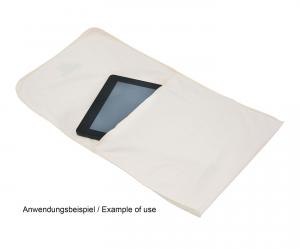
TS-Optics Optical Soft Microfibre Cleaning Cloth and Bag, 26x24 cm
EUR 7,50RRP EUR 11,95you save 37.2% (EUR 4,45)
Eyepiece-side accessories like Filters
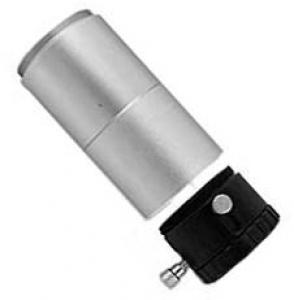
Baader 2458144 - Eyepiece Projektion Adapter with T2 thread, variable

- Only 1 pcs left in stock
EUR 55,00
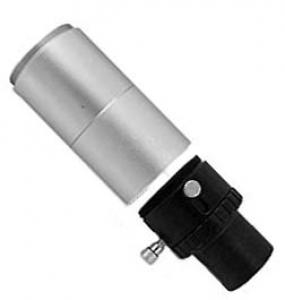
Baader 2458141 - Eyepiece Projektion Adapter with 1.25" barrel, variable
- Only 1 pcs left in stock
EUR 63,00
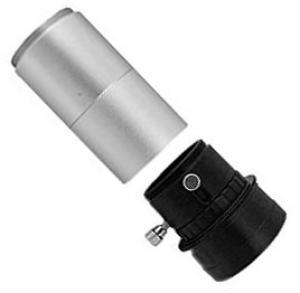
Baader 2458142 - Eyepiece Projection Adapter with 2" barrel, variable
- Only 1 pcs left in stock
EUR 80,00
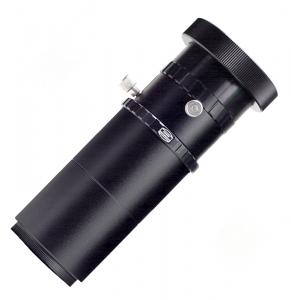
Baader 2458143 - Eyepiece Projektion Adapter with SCT connector, variable
- Only 1 pcs left in stock
EUR 80,00
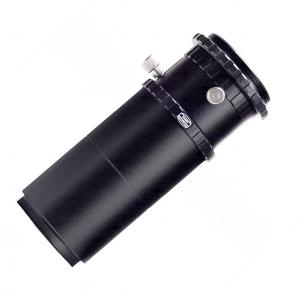
Baader 2458145 - Eyepiece Projektion Adapter with M44 thread, variable
- Only 1 pcs left in stock
EUR 80,00
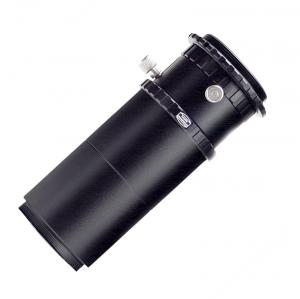
Baader 2458146 - Eyepiece Projektion Adapter with M43 thread, variable
- Only 1 pcs left in stock
EUR 73,00
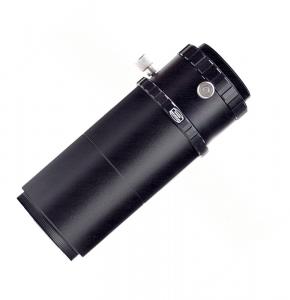
Baader 2458147 - Eyepiece Projektion Adapter with M36.4 thread, variable
- Only 1 pcs left in stock
EUR 73,00
Eyepieces
Finder & Accessories
Reviews
