

- Telescopes
- Overview:
Telescopes - Achromatic Refractor
- Apochromatic Refractor
- Overview:
Apochromatic Refractor - ED Refractor - less color aberration than an achromatic
- SD APO - color free 2-element APO objective
- EDT APO - 3 element ED objective
- High End APO with 3-element APO objective - no color aberation
- Flatfield APO with flat field for Astrophotography
- All Apos and EDs from all manufacturers - large overview
- TS APO and ED from Japan with high quality optics
- Overview:
- Newtonian Telescopes
- Dobsonian Telescopes
- RC Ritchey Chretien Telescopes
- Casssegrain Telescopes
- Reflektor Telescopce with Lens Correcture
- Maksutov Cassegrain Telescopes
- GoTo Telescopes
- Smart Telescopes
- Solar Telescopes H-Alpha
- Overview:
- Mounts Tripods Rings Rails Power Supply ...
- Overview:
Mounts Tripods Rings Rails Power Supply ... - Mounts Equatorial with GoTo
- Mounts Equatorial without GoTo
- Mounts Azimutal with GoTo
- Mounts Azimutal without GoTo
- Mounts GoTo - Harmonic Drive
- Travel mounts for astro imaging
- Tripods Piers Polar Wedges
- Mount Control & Electronics
- Dovetail Clamps, Plates and Mount Adapters
- Tube Rings
- Power Supply
- Counterweights Balance Weights
- Mount Accessories - Other
- Overview:
- Telescope Accessories
- Overview:
Telescope Accessories - Eyepieces
- Barlows & Reducer Lenses
- Diagonal Mirrors and Prisms
- Binocular Viewers
- Finder Scopes
- Telescope Collimation and Test
- Cleaning Tools
- Transport and Storage
- Dust protection for Telescopes & Accessories
- Stray Light Protection
- Dewcaps and Heater
- Focusers, Adapters, Motorfocus
- Telescope DIY & Improvement
- Other telescope accessories
- Replacement Parts
- Overview:
- Filters
- Overview:
Filters - Color Filters and Color Filtersets
- Nebular Filters for Visual Observing
- Neutral-Density and Polfilter
- Photo Narrowband Nebular Filters
- Photo Broadband Filters
- Photo Planetary Filters
- Photo R-G-B and IR Cut Filters
- Photo - Filtersets
- Photometric Filters
- Clip Filter for DSLR Cameras
- Filter Wheels and Filterslider
- Solar Filters for white light
- Solarfilter for H-Alpha and Calcium
- Overview:
- Adaptors
- Overview:
Adaptors - Adapter 1,25" and 24,5mm
- Adapter 2"
- Adapter T2 - M42x0.75
- Adapter M48x0,75
- Adapter M54
- Adapter SC
- Adapter M63
- Adapter M68
- Adapter to other Threads
- Adapter Extensions
- Adapter camera bayonet
- Adapter Objective Filterthread
- Adapter Quick Changing , Rotation
- Adapter Eyepiece Projection
- Adapters Tilting
- Overview:
- Astrophotography and Photography
- Overview:
Astrophotography and Photography - Cooled Cameras
- Cameras without Cooling
- Deep-Sky Cameras uncooled
- Set-Offers Camera, Filter, Wheels
- Acessories for Cameras
- Travel mounts for astro imaging
- Imaging Correctors for Telescopes
- Autoguiding Cameras & Sets
- Everything for Guiding
- Focusing aids - Bahtinov mascs
- Flat Field foils and boxes
- Lenses for Cameras
- Piggyback Camera Holder
- Camera Bags, Photocases & more
- Digital Camera and Smartphone Adapter
- Other photo accessories
- Overview:
- Binoculars, Spotting Scopes, Microscopes, Range Finders
- Overview:
Binoculars, Spotting Scopes, Microscopes, Range Finders - Spotting Scopes and Acessories
- Roof Prism Binoculars
- Binoculars with Porro prisms
- Binoculars from 100mm Aperture
- Binoculars with 1,25 inch eyepieces
- TSMX APO Binoculars
- Binoculars for Astronomy
- Binoculars Hiking Bird watching
- Monoculars - Opera Binoculars
- Accessories for Binoculars
- Range Finders
- Microscopy
- Bags for Phototripods & Binoculars
- Overview:
- Phototripods and Binomounts
- Books, Software
- Overview:
Books, Software - Books for Astronomy Beginners
- Star Charts and Planispheres
- Books about our Solar System
- Observing Tips for Amateurs
- Popular Astronomy Literature
- Teaching material
- Astrophotography books
- Telescopes, Observatories, Construction
- Calendars Yearbooks
- Software, Star Charts
- Books for Microscopers
- Books Nature and Animals
- Nature Photography TimeLapse
- Overview:
- Night Vision, Magnifiers, Weather, Domes & more
- Beginner Astronomy and Gift Ideas
- Second Hand & Special Offers
- New products

manufacturers


Manufacturer: Astronomik Filter
Product number: 8H00VO
EUR279.00new
EUR 279,00
incl. 19 % VAT (DE)
The VAT indicated refers to that applicable in Germany. After logging in, the VAT amount is adjusted to the applicable VAT of the stored delivery country. Therefore, the final price may vary accordingly.
excl. 7.95 € shipping costs (DE)
more details to the shipping costs ...Please log in to calculate shipping costs to your country.

There are no reviews for this product


- Details..
- Technical data..
- In the box..
- Manufacturer infos..
- Safety informations..
Astronomik UHC-E Lens Filter, M77 Thread
This filter is suitable for visual observation from areas affected by artificial light pollution. Even in small telescopes, it enhances the contrast between emission nebulae and comets and the sky background.Excellent for observing comets! Also increases contrast for nebular objects and reduces the brightness of stars and the sky background. The useful range extends from focal ratio of f/2 to f/15 for telescopes with apertures up to 5" (125 mm).
Main use:
The filter is designed for observing and photographing diffuse nebulae and planetary nebulae from cities and areas with artificial light pollution.
Unlike most other UHC filters, the UHC-E also transmits the Swan band lines (C2) at 511 nm and 514 nm. This makes it suitable as a comet filter, because dicarbon is produced in the coma and ion tail, which emits these lines. The dust tail, on the other hand, is attenuated.
How it works:
The filter completely blocks the emission lines of low- and high-pressure lamps (mercury (Hg) and sodium (Na)) and the lines of the airglow. This increases the contrast between the sky background and the object being observed. However, due to the larger bandwidth, this is less than with the UHC filter, but the greater total amount of light allows for practical use even with smaller telescopes. The filter´s transmission range includes an emission line that occurs primarily in the tails of comets.
Other uses:
Alternatives:
If you use a telescope with an aperture larger than 5", we suggest the use of an Astronomik standard UHC filter because of its greater contrast enhancement capabilities. If you use a telescope larger than 8", you can try the Astronomik [O III] filter for even better results when observing specific nebulae.
Suitability:
| Material: | Fine-optical polished glass |
| Coating: | Hard-coating, anti-reflective and scratch resistant |
| Transmission visual, typical: | 93% at H-beta (486 nm) and 93% at [O III] (501 nm), additionally two bright Swan band lines |
| Transmission photographic, typical: | 90% at H-Alpha (656 nm) |
| Transmission range: | 480 nm - 525 nm and from 645 nm to over 700 nm |
| Usable focal ratios: | f/2 to f/15 |
| Parfocal: | with other Astronomik filters, except the XT filter versions |
| Filter thickness: | 1 mm |
| Material of cell: | Aluminium |
| Connection: | M58 thread |
- 1 Filter
- Storage box
- Storage box
| Manufacturer / Importeur: | Vesting e.K. |
| Street: | Storchenweg 6 |
| ZIP / City: | 21217 Seevetal |
| Country: | Germany |
| Telefon number: | +49 40 5114348 |
| Email: | astro@astro-shop.com |
| Website: | www.astro-shop.com |
Safety informations: PDF Download
Recommended accessories
Adaptors
Cleaning & Collimating

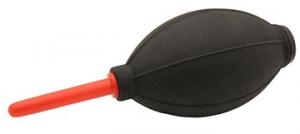


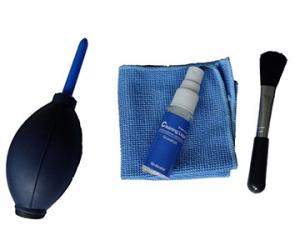
TS-Optics cleaning set, 4 pieces - bellows, brush, cleaning fluid, microfiber cloth

- Only 1 pcs left in stock
EUR 19,90
Similar Products
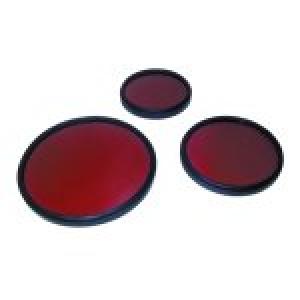
Lumicon M58 H-alpha and IR Pass Filter
- Only 1 pcs left in stock
EUR 189,00RRP EUR 229,00you save 17.5% (EUR 40,00)

Transport & Covers
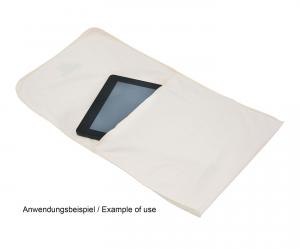
TS-Optics Optical Soft Microfibre Cleaning Cloth and Bag, 26x24 cm
EUR 7,50RRP EUR 11,95you save 37.2% (EUR 4,45)
Reviews
